
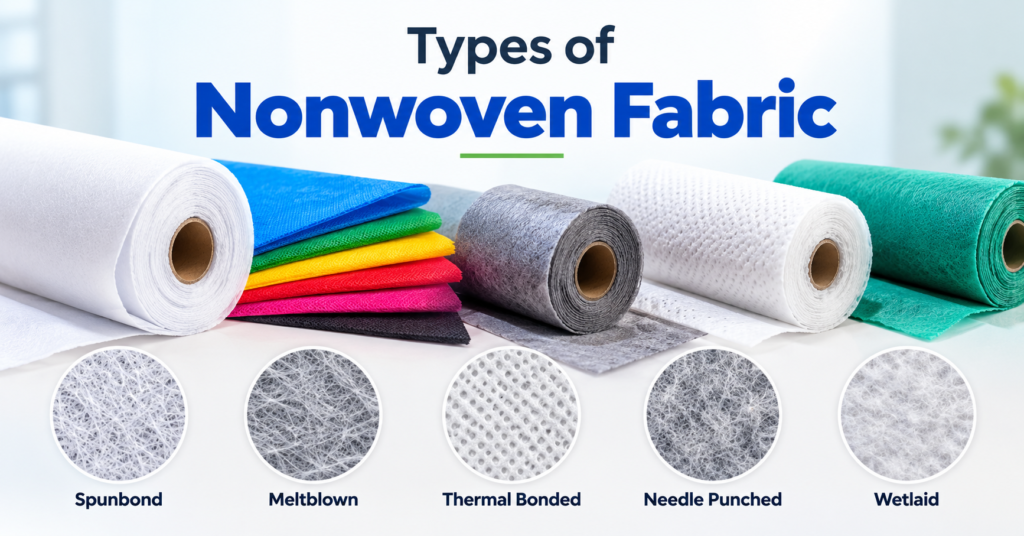
Nonwoven fabric is all around us, from supermarket bags and face masks to diapers, moist towelettes, and crop covers of different kinds. However, not all nonwoven fabrics are the same. Each type of fabric is produced in its own way and is suitable for its application.
Quick answer: The most important types of nonwoven fabric include spunbond, meltblown, spunlace, needle-punched, airlaid, and wetlaid fabrics and composite fabrics such as SMS. Of all types of nonwoven, the spunbond is the most extensively used. It finds application in making bags, packing materials, and for agriculture and hygiene purposes. Meltblown is used in filtration, spunlace is meant for the production of wipes, and needle punched is used in making felts and geotextiles.
What Is Nonwoven Fabric?
Nonwoven fabric is a sheet of fibres that have been joined together using heat, pressure, water jets, needles, or chemical treatment with no weaving process used. Because there is no weaving, nonwovens can be produced faster and at a lower price.
Most of the nonwoven fabrics are manufactured from polypropylene (PP), polyester, viscose, or their mixtures. They can be designed to be soft or stiff, light or heavy, absorbent or water-resistant, depending on the end use.
What Are the Main Types of Nonwoven Fabric?
1. Spunbond Nonwoven Fabric
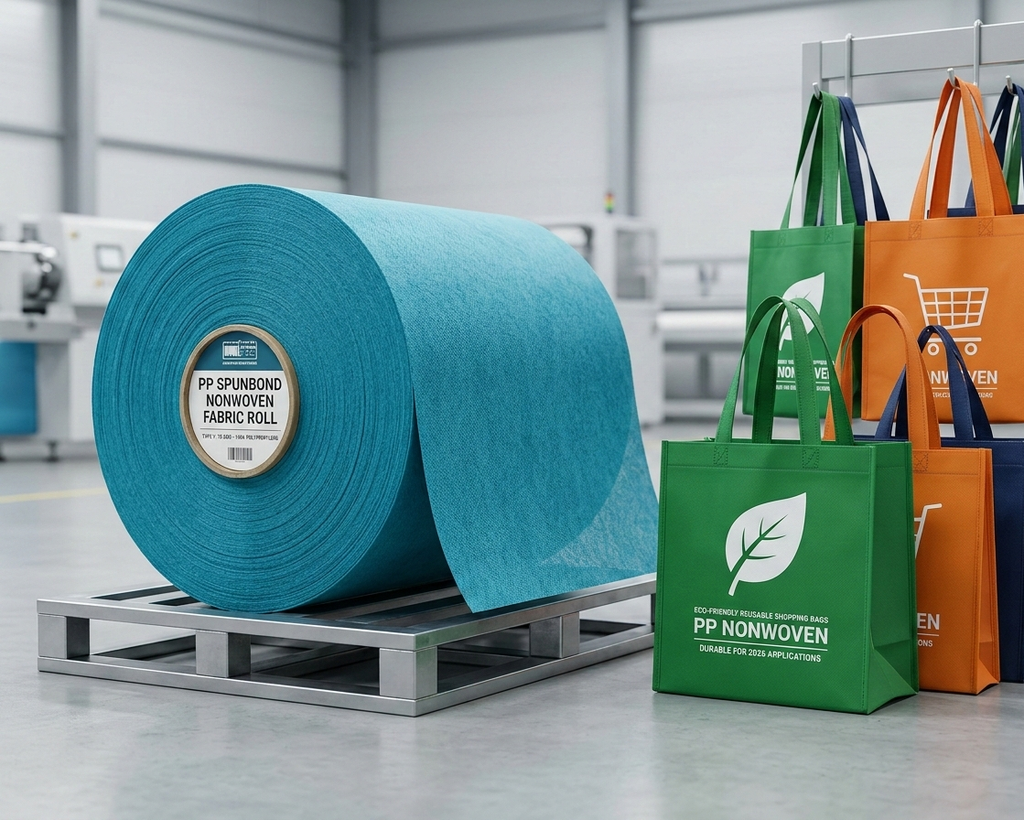
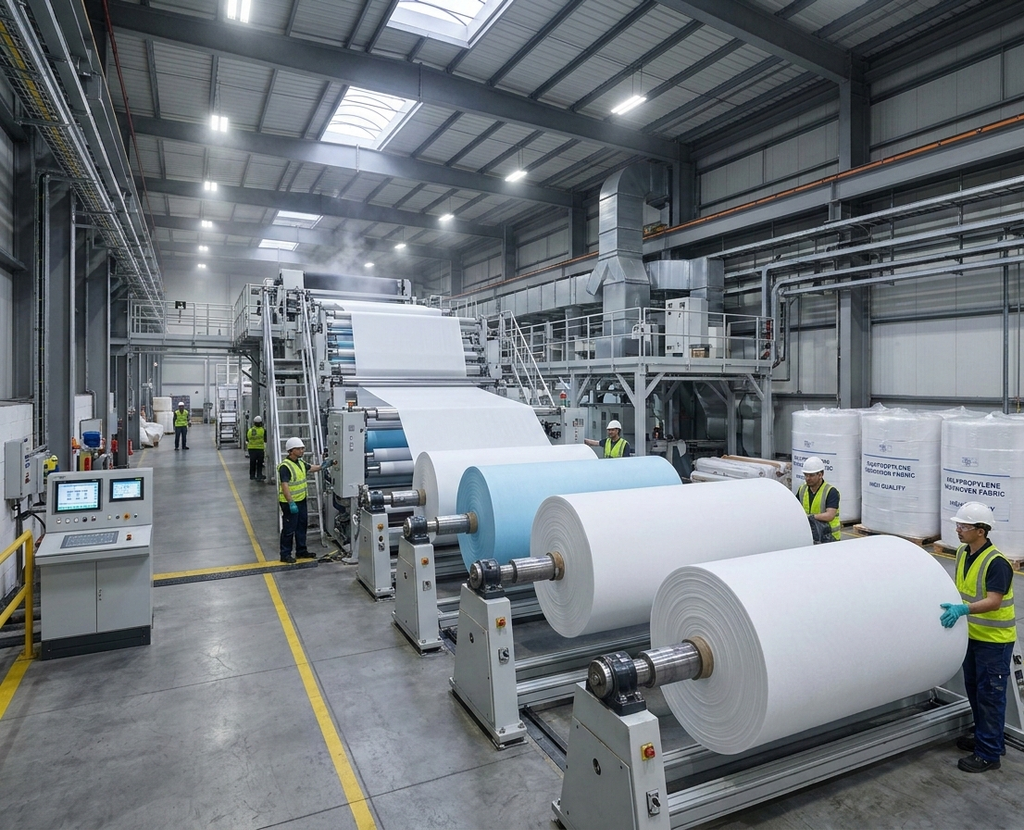
Melted polymer (in most cases polypropylene) is spun into very long and continuous threads, laid into a web and bonded using heat and pressure. PP spunbond nonwoven fabric possesses strength, lightness, and resistance to moisture and is budget-friendly.
Uses: Shopping bags, packaging, crop covers, hygiene products, furniture and mattress covers.
2. Meltblown Nonwoven Fabric
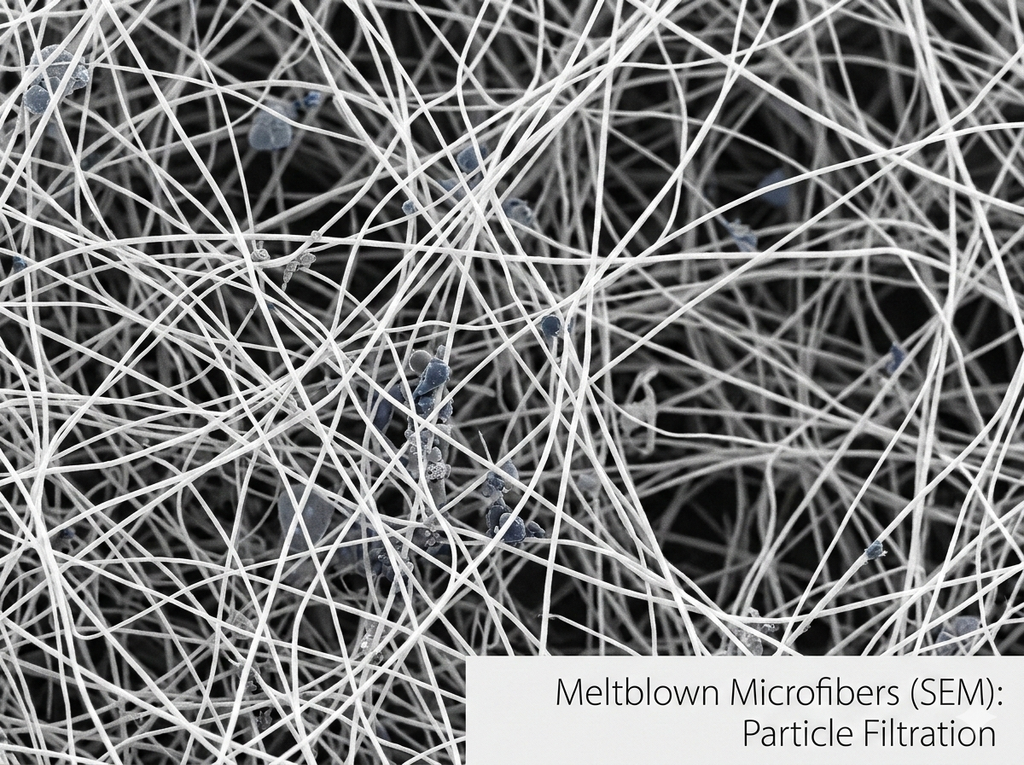
Polymer is blown into very fine microfibres with hot air, forming a thick web having numerous small pores. It is effective for trapping particles but is less strong than spunbond.
Uses: Face mask filter layers, air and liquid filters, and oil-absorbent pads.
3. Spunlace Nonwoven Fabric
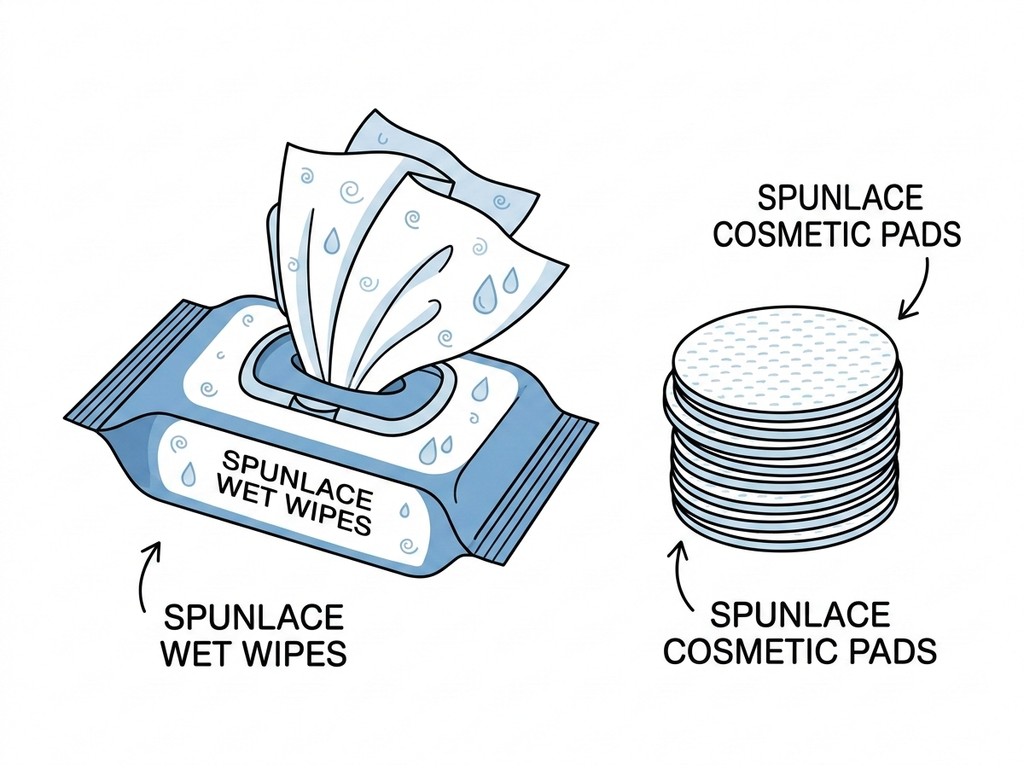
Spunlace is also known as hydroentangled fabric and employs high-pressured jets of water to connect fibres together, such as polyester and viscose. It is soft, absorbent and resembles cloth.
Uses: Wet wipes, facial sheet masks, cosmetic pads and medical dressings.
4. Needle Punched Nonwoven Fabric
A series of barbed needles punch through a fibre web and thus fasten fibres together. The product produced is thick, strong and has a felt-like character.
Uses: Geotextiles, carpets, automotive interiors, felts and insulation.
5. Airlaid Nonwoven Fabric
Fluff pulp and other short fibres are dispersed in the air and then bound together into a fast-drying and highly absorbent nonwoven sheet.
Uses: Absorbent cores, table napkins, food tray pads and cleaning products.
6. Wetlaid Nonwoven Fabric
Based on the paper production process, wetlaid nonwoven fabrics are manufactured by mixing fibres with water to form a sheet.
Uses: Tea and coffee filters, speciality filters, battery separators and wallcoverings.
7. SMS and Other Composite Nonwoven Fabrics
SMS is made of three layers consisting of spunbond, meltblown, and spunbond. The outer layers are designed to provide strength, and the meltblown one is for a barrier. Other composite fabrics are layered SPMS and laminated nonwoven.
Uses: Surgical gowns and drapes, medical masks, diaper leg cuffs and protective clothing.
Types of Nonwoven Fabric and Their Uses: Comparison Table
| Type | Key feature | Strength | Main uses |
| Spunbond | Light, strong, breathable | High | Bags, packaging, agriculture, hygiene |
| Meltblown | Ultra-fine fibres, great filtration | Low | Masks, filters, absorbents |
| Spunlace | Soft, absorbent, cloth-like | Medium | Wipes, sheet masks, medical pads |
| Needle-punched | Thick, dense, felt-like | High | Geotextiles, carpets, automotive |
| Airlaid | Bulky and very absorbent | Low to medium | Absorbent cores, napkins, food pads |
| Wetlaid | Smooth and uniform | Medium | Tea bags, filters, battery separators |
| SMS / composites | Strength plus barrier | High | Surgical gowns, masks, hygiene cuffs |
Common Uses of Nonwoven Fabric Across Industries in 2026
- Retail and shopping bags: Reusable bags for carryout, promotional bags and bag-in-box. Browse through our range of fabrics for shopping bags.
- Packaging: Protective wraps, covers and bag making. See our nonwoven fabric for packaging.
- Hygiene and medical: Nappies, sanitary pads, medical masks, medical sleeves and bonnets. See our nonwoven fabric for hygiene products.
- Agriculture: Crop coverings, frost protection, mulching, nursery bags. See our agriculture fabrics.
- Furniture and bedding: Coverings for beds, upholstery of sofas and pocket spring fabrics.
- Construction and automobiles: Geotextiles, insulation, roofing membranes and leather of vehicle seats.
- Filtration: : Air, water and industrial filters.
These nonwoven fabric applications continue to expand due to the increasing demand for lightweight and economical reusable products.
Why Is PP Spunbond Nonwoven Fabric Widely Used?
PP spunbond is a nonwoven fabric that is well-known for its strength and cost-effectiveness. Learn more about our PP spunbond nonwoven fabric manufacturing capabilities.
- Sturdy for its weight: Continuous fibres provide resistance against tearing.
- Light and breathable: The fabric feels comfortable for healthcare and hygiene products.
- Naturally water-repellent: Polypropylene does not soak up water.
- Wide range of GSM: From ultra-light to heavier duty grades used in bags and packaging.
- Easy to work with: Can be cut, stitched, heat-sealed, and printed with ease.
- Many colours available: Ideal for retail and branding purposes.
- Affordable: Ideal for mass production.
How to Choose the Right Type of Nonwoven Fabric
- Define the use: The use of bags, hygiene, filtering, agriculture, or industry.
- Pick the type: use spunbond for strength and cost-effectiveness, meltblown for filtering, spunlace for softness, or needle-punched for thickness.
- Select the GSM: Higher GSM means higher strength and thickness.
- Check special finishes: hydrophilic for hygiene, UV stabilised for outdoor usage, or laminated for water resistance.
- Consider colour and printing: important in retail and for branded products.
- Test samples: Carry out strength, feel, and performance tests.
What Factors Affect the Price of Nonwoven Fabric?
- Raw material cost: Costs of polypropylene are connected with oil and polymers’ international market trends.
- GSM: Heavier fabrics use larger amounts of material per square metre.
- Fabric type: Meltblown, spunlace, and composite fabrics cost more than spunbond ones.
- Finishes and additives: Colour, UV protection, hydrophilic processing, and lamination increase the price.
- Material quality: 100% virgin polypropylene is a lot more expensive than the fabric with the significant amount of fillers (but works better).
- Order quantity: Usually, the bigger the order quantity is, the better prices are.
- Freight and packaging: Distance and roll size affect the final landed cost.
How to Choose a Reliable Nonwoven Fabric Manufacturer in India
- Precise requirements: GSM, width, hue, roll length, and finish
- Quality raw materials: It must be mostly virgin polypropylene.
- Quality: Consistent quality across orders
- Samples: Sample material before mass order
- Production capacity and lead time: Minimum order quantity, production, and supply timelines
- Customisation: Colour, UV resistiveness, water affinity, and lamination options.
Metro Plasto is a well known nonwoven fabric manufacturer in India and has been producing its PP fabric since 2011 in Bhiwani, Haryana. The fabric is 100% virgin polypropylene and comes in various colours and finishes suitable for bags, packaging, hygiene products, medical applications, and agriculture.
Frequently Asked Questions
What are the different types of nonwoven fabric?
The main types of nonwoven fabric are spunbond, meltblown, spunlace, needle-punched, airlaid, wetlaid, and composites such as SMS.
Which nonwoven fabric is best for shopping bags?
PP spunbond nonwoven fabric, usually having a GSM of 70 to 90, is appropriate for most reusable bags.
What is the difference between spunbond and meltblown fabric?
Spunbond fabric has thicker and continuous filaments, making it sturdy, while meltblown fabric makes use of very thin fibres that are functional for filters.
Is PP spunbond nonwoven fabric waterproof?
No, it has a water-resistant nature but only becomes waterproof after being laminated or coated.
What does GSM mean in nonwoven fabric?
GSM refers to grams per square metre. This gives an idea of the weight of the fabric and usually how thick it is.
Which nonwoven fabric is used for diapers and hygiene products?
For the top sheet layer, a hydrophilic PP spunbond is used, whereas for the leg cuffs and barriers, an SMS and hydrophobic spunbond are used. Explore our range of nonwoven fabric for hygiene products.
Conclusion
Knowing the types of nonwoven fabric enables you to select a suitable fabric for every purpose. Spunbond is good for bags, packing, and agricultural and sanitary applications; meltblown works well for filtration; spunlace is best for wipes; and needle-punched is utilised in industries and other heavy-duty purposes. Ensure that your requirements, GSM, and finishing correspond to each other and that you approach trusted manufacturers.
Looking for quality PP spunbond nonwoven fabric? Contact Metro Plasto for samples and a quick quote.