
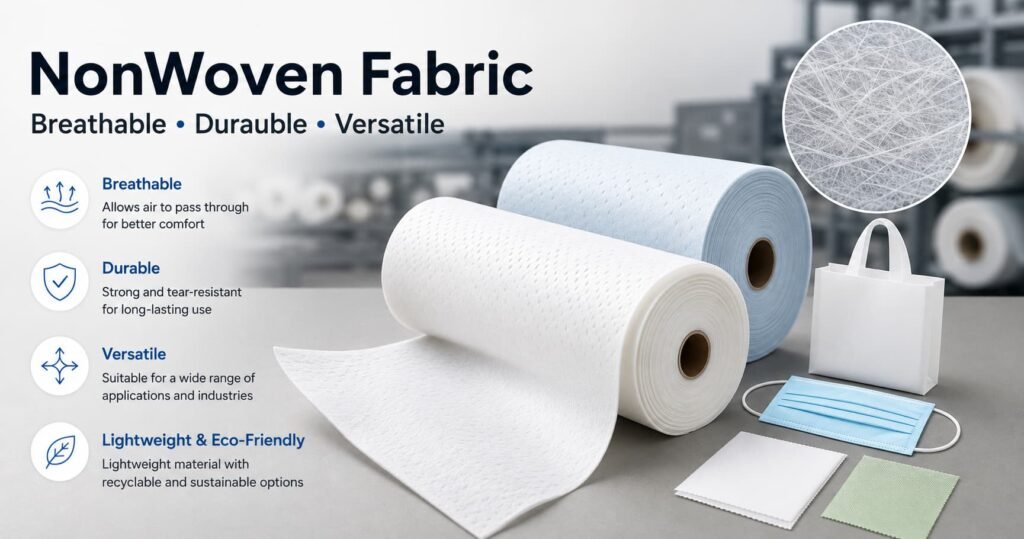
For organisations that need reliable bulk supply, stable quality, and reasonable rates, it is important to choose a suitable nonwoven fabric manufacturer in Haryana. Nonwoven fabrics find application in several sectors, like medical care, hygiene, agriculture, packing, and so on. Due to the industrial infrastructure as well as proximity to Delhi-NCR, Haryana has strategic importance as a supply base for bulk buyers. However, pricing is not the only consideration that one should think of while making the choice. Quality of raw materials, consistent GSM, production volume, customisation capabilities, certifications, packing, and delivery time should be considered before choosing a nonwoven fabric supplier in Haryana. for a long-term cooperation.
Why Haryana Is a Leading Hub for Nonwoven Fabric Manufacturing
Haryana has a well developed industrial system as well as infrastructure, a skilled workforce, and excellent transport connections with Delhi-NCR and other important markets.
It is also advantageous logistically for bulk buyers to get in contact with manufacturers who are able to fulfil recurring orders and to meet the needs of their customers. Its location also supports efficient transportation across North India and beyond.
What Is Nonwoven Fabric and How Is It Manufactured?
Nonwoven fabric manufacturing does not involve the conventional methods of weaving and knitting. In this case, the fibres are joined into a web. After this, they have to be treated with various mechanical, thermal, or chemical processes to obtain the required properties.
PP spunbond nonwoven fabric is one of the most widely used varieties. It is made of polypropylene granules that have been melted and then extruded into filaments. All those filaments are joined together to form a web.
The performance of the nonwoven fabric is conditioned by such factors as the quality of the raw material used, GSM, thickness, bonding strength, and finishing.
Types of Nonwoven Fabrics and Their Applications
Common types include spunbond, meltblown, spunlace, needle-punched, and laminated nonwoven fabrics.
| Fabric Type | Key Features | Common Applications |
| PP Spunbond | Lightweight and strong | Bags, hygiene, agriculture |
| Meltblown | Fine fibres, filtration | Filters, medical applications |
| Spunlace | Soft and absorbent | Wipes, personal care |
| Needle-Punched | Durable and strong | Geotextiles, automotive |
| Laminated | Enhanced barrier properties | Packaging, protective products |
A reliable manufacturer can recommend the appropriate fabric based on your application, performance requirements, and budget.
Industries That Use NonWoven Fabrics
The adaptability of nonwoven materials is utilised in a wide range of sectors, including:
- Medical: Surgical gowns, caps, masks, shoe covers, and disposable items
- Hygiene: Diapers, sanitary items, and adult hygiene products
- Agriculture: Crop covers and plant protection
- Packaging: Retail bags, advertising bags, and items used for packaging
- Construction: Geotextiles, insulating materials, roofing materials, and protection
- Automotive: Interiors of vehicles, heat control inside the vehicles, and filtration
- Furniture: Mattresses and upholstery
How to Choose the Best Nonwoven Fabric Manufacturer in Haryana
Assessing the Nonwoven Fabric Manufacturer in Haryana production capability, raw material quality, technical expertise, quality assurance practices, and consistency of specifications must be done before placing a bulk order.
Request samples and check parameters like GSM, thickness, tensile strength, width, colour, and finish.
Supplier Evaluation Checklist
- Raw material quality
- Production capacity
- GSM and Width
- Consistency in production
- Quality control systems
- Customisation options
- Accreditations and certifications
- Minimum order quantity and lead time
- Packaging and Logistics
- Technical and customer support
Quality Standards and Certifications
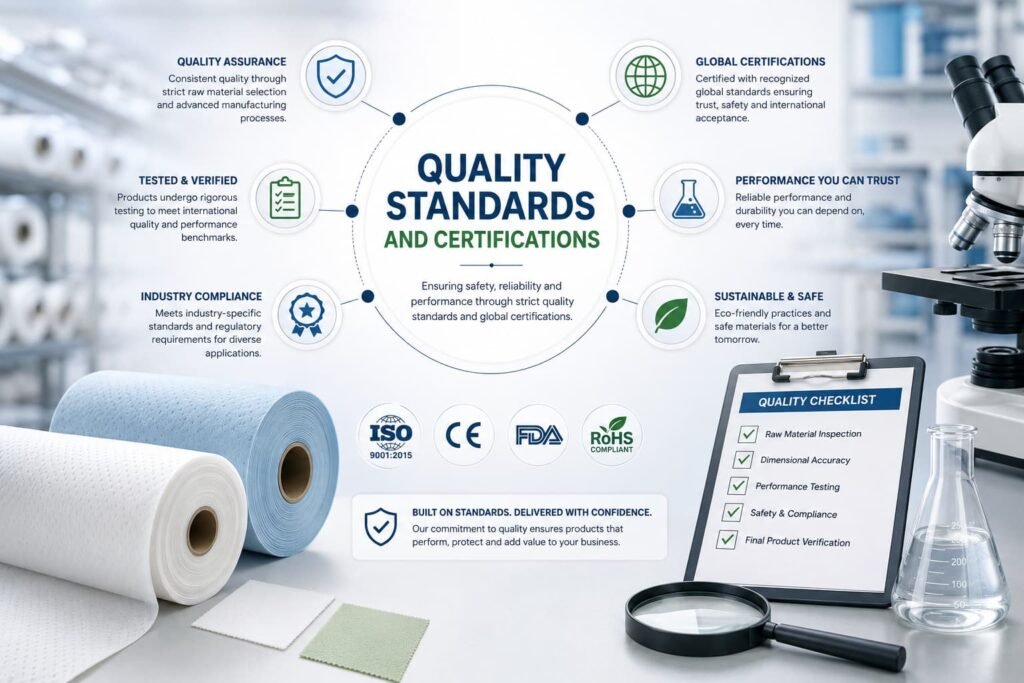
Different applications require different standards. You should ask the manufacturer for product specifications and test reports to check the values of the most important metrics, such as GSM, tensile strength, thickness measurement, elongation, or filtration efficiency.
When it comes to medical and other regulated sectors, it is important to verify the required safety, compliance, and industry specific documentation that complies with a given industry practice before purchasing.
Bulk Procurement Process
The initial step involves creating a specification sheet that specifies the fabric kind and type, GSM of the fabric, width, colour, roll length, quantity, application, and supply particulars.
Send out specifications and request samples and quotes from the shortlisted suppliers. Approve the samples and specifications before giving a go-ahead for order confirmation. In case of a repeat order, keep an approved specification to ensure that the order quality is maintained in different batches.
Customization Options
Depending on the manufacturer’s capabilities, nonwoven fabric can be customised by:
- GSM and Thickness
- Width and Length of the Roll
- Color
- Printing
- Laminating
- Hydrophilic or Hydrophobic Treatment
- Functional Finish
- Packaging, Storage, and Logistics
Discuss customisation necessities in advance to confirm feasibility and minimum order quantity (MOQ).
Packaging, Storage, and Logistics
Proper packaging of fabric rolls shields them from dust, moisture, and contamination during transport. Nonwoven fabric has to be stored in clean, dry conditions, with no direct sun exposure or excessive moisture.
In case of bulk orders, check the suppliers’ delivery capabilities and transportation arrangements to eliminate possible delays.
Sustainable Manufacturing Practices
B2B buyers should ask manufacturers about material efficiency, production waste management, ways of recycling, and recyclable material options. Supporting information should be requested if sustainability is among the major requirements for procurement.
Common Mistakes Buyers Should Avoid
- Selecting solely based on cost: Cheap prices might imply trade-offs on quality or consistency.
- Skipping sample testing: Evaluate GSM, strength, thickness, finish, and suitability for the application before full scale production.
- Overlooking specifications: Make sure to specify materials, GSM, width, colour, roll length, and purpose.
- Not checking production capacity: Be sure that the manufacturer can deliver the needed current and future volumes.
- Ignoring certifications: Make sure to check the relevant certifications and testing documentation.
- Failing to determine MOQ and lead times: Clarify the order quantities and delivery schedules in advance.
- Comparing suppliers based only on cost: Compare suppliers based on quality, on-time delivery, customisation, and cost-effective procurement.
Expert Tips for Bulk Buyers
- Prepare a specification sheet: Clearly define all technical requirements before requesting quotations.
- Request samples: Assure product quality before commencing bulk production.
- Assess suppliers: Analyse their technical capabilities, pricing, production capacity, and service.
- Check quality assurance systems: Ask them about laboratory tests and batch checks.
- Discuss customisation early: Clarify the requirement for GSM, width, printing, lamination, and special finishes.
- Plan recurring orders: Provide them with forecasts of your demand to facilitate production and delivery.
- Build a long-term supplier relationship: Reliable manufacturers can provide better consistency and procurement efficiency.
Conclusion
Selecting the right nonwoven fabric manufacturer in Haryana aids businesses in obtaining consistent product quality, bulk supply, competitive prices, and customised solutions. For repetitive needs, directly engaging with a well-established nonwoven fabric supplier in Haryana can make the procurement process hassle-free and ensure consistency in supply. Always have product samples, specify requirements clearly, and evaluate suppliers based on the value they offer rather than price.
Read also: Hygiene Non Woven Fabric for Diapers, Sanitary Napkins & Medical Products
Frequently Asked Questions
Who is a reliable nonwoven fabric manufacturer in Haryana?
Search for a manufacturer with consistent quality, adequate capacity, testing facilities, customisation capabilities, and reliable bulk delivery.
What industries use PP spunbond nonwoven fabric?
PP spunbond nonwoven fabric is commonly used in the packaging, healthcare, hygiene, agriculture, construction, automotive, and furniture sectors.
How do I choose the right GSM?
Select GSM according to the specific requirements of the application in terms of strength, thickness, durability, and flexibility.
Can nonwoven fabrics be customised?
Yes, it is possible. Depending on the manufacturer, possible options could include GSM, width, colour, length of the roll, printing, lamination, and finishing.
What certifications should a manufacturer have?
Depending on the needs of the application, the documentation can be different. Ask for relevant certificates related to the quality, safety, testing, and documentation specific to the industry.