
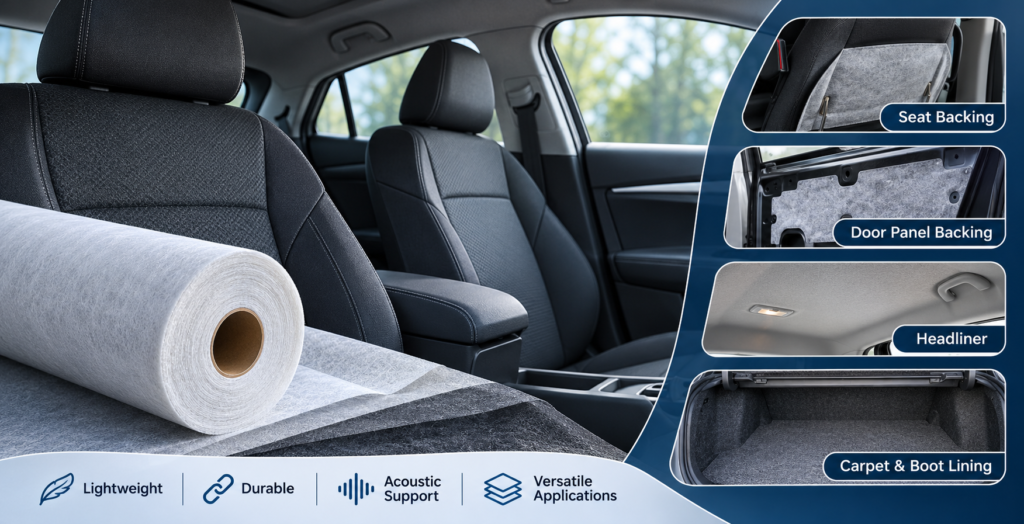
Non woven fabric for automotive interiors can serve a range of functions, from reinforcing seat covers to forming part of a door trim or carpet backing. Although these layers are often concealed, their construction and compatibility with other materials can influence how a finished component performs.
For automotive component manufacturers, seat makers and procurement teams, the challenge is choosing the right material for each part. A lightweight polypropylene spunbond sheet and a dense needle-punched felt, for example, are designed for different jobs.
This guide explains the options, their applications and the specifications to confirm before buying fabric rolls.
What Is Non Woven Fabric in Automotive Interiors?
Nonwoven fabrics are sheets of fibres or filaments bonded or mechanically interlocked rather than woven into yarn-based structures.
Automotive applications range from trim reinforcement to acoustic layers. The INDA automotive and transportation overview describes uses in seating, floor coverings and other interior components.
The material construction must match the function of the part.
Types of Non Woven Fabric Used in Automobiles
Different types of nonwoven fabrics are used in automotive manufacturing depending on the component’s functional requirements, durability and production process.
| Fabric Type | Typical Role in Interior Components |
| PP spunbond | Lightweight backing, cover or separation layers where the grade is suitable. |
| Needle-punched felt | Carpet structures, moulded trim and acoustic layers, depending on construction. |
| Thermal-bonded wadding | Loft or cushioning layers where specified. |
| Composite or laminated layers | Combined fabric, foam or film structures for selected trim and backing applications. |
PP spunbond is made by forming continuous polypropylene filaments into a web and bonding them. It is distinct from needle-punched felt, which uses mechanically interlocked fibres.
A composite may combine more than one construction to meet a component specification.
Applications of Non Woven Fabric for Automotive Interiors
Car Seat Backing and Under-Covers
A suitable nonwoven layer may reinforce upholstery, separate adjoining materials or provide an underside covering.
Technical fabric suppliers document spunbond use in automotive seating, but the correct grade depends on seam strength, abrasion, the assembly design and the vehicle manufacturer’s requirements.
Door Panel Backing
Nonwoven layers can be used behind decorative door trim. A backing may provide support during assembly, while thicker engineered materials may contribute to acoustic performance.
A thin spunbond sheet should not be treated as a substitute for a tested sound-absorbing felt.
Headliners, Carpets and Boot Linings
Headliners and interior trim may incorporate nonwoven facings, substrates or backing layers. Floor and luggage-compartment coverings can also use nonwoven structures.
Where noise reduction, shape retention or moulding is important, the full material assembly needs to be evaluated rather than the fabric alone.
Benefits and Limitations of PP Spunbond Fabric
Polypropylene spunbond fabric can be considered where a lightweight, flexible sheet is needed. It is available in different weights, colours and widths, and suitable grades can be cut, stitched or laminated.
These characteristics may help converters match the material to their equipment and component design.
However, a lightweight fabric is not necessarily appropriate for an exposed, high-wear surface. Heat during bonding or moulding can affect polypropylene, and acoustic or fire performance cannot be inferred from the fabric type.
Check the approved grade and test the complete assembly before production.
How to Select Non Woven Fabric for Automotive Interiors
Start with the part drawing and the original equipment manufacturer (OEM) or customer specification.
The following criteria are useful when discussing materials with a supplier:
| Specification | What Buyers Should Confirm |
| GSM and thickness | Weight per square metre, thickness and permitted variation. |
| Mechanical performance | Required tensile, tear, seam and abrasion properties, where applicable. |
| Roll width and length | Usable width, roll length, core size and compatibility with converting equipment. |
| Colour and finish | Approved shade, appearance, surface treatment and bonding compatibility. |
| Processing conditions | Cutting, stitching, adhesive and temperature requirements for the actual process. |
For more detail on roll dimensions and tolerances, see our guide to custom non-woven fabric rolls.
A higher GSM does not automatically mean better performance; fibre structure and bonding also matter.
Automotive Fabric Testing and Quality Requirements
Non woven fabric for automotive interiors may require flammability, odour, fogging and durability testing, depending on the component and customer specifications.
ISO 3795 describes a burning-behaviour test method for vehicle interior materials. ISO 6452 addresses fogging testing for specified interior trim materials and other applicable materials.
Confirm which methods and acceptance limits your customer requires.
Fogging occurs when substances released from interior materials form condensate on glass under relevant conditions.
Ask whether the approved material and finished assembly require separate tests. A test method reference alone does not establish that a product complies with a regulation or OEM standard.
What to Check Before Ordering Non Woven Fabric Rolls
Before placing a bulk order, provide the supplier with enough detail to assess feasibility and quote the correct material.
Use the following procurement checklist:
- Component name, intended function and material drawing or specification.
- Required polymer, fabric type, GSM, thickness, width, length and colour.
- Mechanical properties, tolerances, processing conditions and applicable test requirements.
- Sample requirements, order quantity, packaging and delivery location.
- Written approval criteria, batch identification and documentation needed for repeat orders.
Where possible, evaluate a sample on the actual production line before approving the grade.
On delivery, inspect the rolls for damage, stains, inconsistent appearance and dimensions. Store them according to the supplier’s handling instructions and retain batch labels for traceability.
PP Spunbond Non Woven Fabric from Metro Plasto
Metro Plasto is a non woven fabric manufacturer based in Bhiwani, Haryana, India.
Our published range includes PP spunbond non woven fabric rolls with options for fabric weight, colour, width and roll length.
For automotive component enquiries, share your application and technical specifications so the team can discuss available grades, sample options and whether the required properties can be supported.
Suitability and test requirements must be confirmed before approval for automotive production.
Frequently Asked Questions (FAQs)
1. What is non woven fabric used for in automotive interiors?
Depending on the construction, it can be used in seat backing, trim, headliners, carpets and luggage-compartment linings.
2. Can PP spunbond non woven fabric be used for car seat backing?
Selected grades can be considered for backing or covering applications. Confirm the component specification and validate the material before use.
3. What is the difference between spunbond and needle-punched fabric?
Spunbond uses continuous filaments bonded into a sheet. Needle punching mechanically entangles fibres and can create thicker felt structures.
4. What GSM is suitable for automotive non woven fabric?
There is no universal GSM. The required weight and thickness depend on the component, mechanical properties and customer specification.
5. What tests are required for automotive interior materials?
The applicable tests depend on the component, market and OEM requirements. They may include flammability, odour, fogging, strength and abrasion.
6. What details should I provide when requesting a quote?
Share the intended application, material specification, required GSM, dimensions, colour, quantity, test requirements and delivery location.
Choosing the Right Non Woven Fabric for Automotive Interiors
Choosing the right non woven fabric for automotive interiors requires careful consideration of material properties, component specifications and manufacturing processes.
If you are sourcing PP spunbond fabric for a component project, contact Metro Plasto to discuss your specifications, available options and quotation requirements.