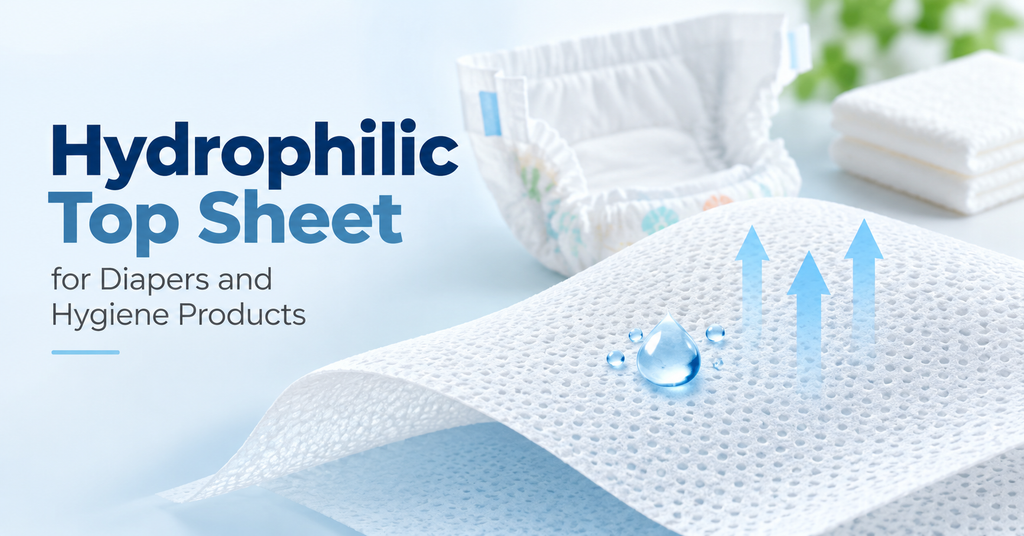
The top layer that hits the skin determines the level of dryness, softness, and comfort of any diaper or sanitary product. This top layer is called the top sheet, and it is usually made from a hydrophilic nonwoven textile.
Quick Answer: A hydrophilic top sheet means a soft, nonwoven layer that attracts moisture, situated above the skin in diapers, sanitary napkins, and incontinence products. It helps the fluid to enter the absorbing layer without making the top layer wet.
What Is a Hydrophilic Top Sheet?
“Hydrophilic” means water-loving. A hydrophilic top sheet is an integral component of absorbent products that allow for the quick passage of moisture. Generally, top sheets are formed from polypropylene nonwoven material. Polypropylene has the property of repelling water; therefore, manufacturers apply a hydrophilic treatment on it.
This enables the moisture to be absorbed and processed by the lower layers and therefore to avoid the formation of puddles on the surface. The material chosen for this type of top sheet is relatively light, with a density of 12-20 gsm.
How Does a Hydrophilic Top Sheet Work in a Diaper?
A diaper is built in layers:
- Top sheet: allows fluids to pass pretty well and is made of material that is soft against the body.
- Acquisition and distribution layer (ADL): spreads liquids evenly over the absorbing core.
- Absorbing core: fluff pulp plus the superabsorbent polymer (SAP) seal liquid inside.
- Backsheet: A waterproof outer layer that prevents leaks
Once the liquid comes in contact with the top sheet, it is absorbed quickly into the layers. When absorbed by the core, the top sheet also helps to stop the liquid from returning to the surface.
Key Benefits of Hydrophilic Top Sheet Material
Below are the advantages associated with the use of this product:
- Fast absorption: Liquid passes through quickly, reducing leaks.
- Dry surface: Helps keep skin drier and more comfortable.
- Soft: Has gentle effects on the sensitive skin of babies and adults.
- Breathable: Enables air to circulate and thus minimises heat and moisture accumulation.
- Lightweight: Low GSM keeps products thin and comfortable.
- Cost-effective: Efficient for high speed, large volume production.
Types of Hydrophilic Nonwoven Fabric Used in Hygiene Products
| Type | How it is made | Key features |
| Hydrophilic PP spunbond | Continuous PP filaments are bonded with heat, then given a hydrophilic finish | Strong, light, affordable; the most widely used top sheet |
| SMS / SMMS hydrophilic | Spunbond and meltblown layers combined | Fine, uniform surface with a soft feel |
| Thermal-bonded / air-through | Short fibres bonded with hot air | Very soft and lofty; used in premium products |
| Spunlace (hydroentangled) | Fibres tangled together with water jets | Cloth-like and absorbent; also used in wipes |
Applications of Hydrophilic Top Sheets in Hygiene Products
- Hygiene items: such as breast pads and pet pads
- Baby diapers and pants: The most prevailing application of baby diaper fabric.
- Sanitary pads and panty liners: The nonwoven fabric of sanitary pads provides a soft, dry surface.
- Adult incontinence products: Includes adult diapers, pads, and underpads.
- Medical items: Underpads, dressings, and disposable sheets.
- Other.
See more about nonwoven fabric for hygiene products.
Hydrophilic vs. Hydrophobic Nonwoven Fabric
| Factor | Hydrophilic | Hydrophobic |
| Meaning | Attracts water | Repels water |
| Role | Let the liquid pass through | stops liquid from passing |
| Treatment | PP with a hydrophilic finish | Plain PP or water-repellent finish |
| Position in a diaper | Top sheet (skin side) | Leg cuffs, side panels and back sheet layers |
| Main goal | Fast absorption and dry feel | Leak protection |
Applications of Hydrophilic Top Sheets in Hygiene Products
- Product type: Baby diapers, feminine hygiene pads, and products for adult needs have different performance requirements.
- GSM: A lighter top sheet will have a thinner feel, while more GSM means a softer and stronger top sheet.
- Softness: High quality items generally employ softer spunbond, SMS, or air-through materials.
- Strike through speed: Fabric must be absorbent after various wettings.
- Rewet performance: Low rewet makes the top sheet less wet.
- Durable hydrophilic finish: The finish must keep its function after numerous wettings.
- Skin safety: Safe finishes used in the fabric and tested for use in hygiene products.
- Machine performance: Fabric must be suitable for high-speed machine production.
Quality Tests for Hydrophilic Nonwoven Fabric
Common tests, often based on EDANA and INDA (NWSP) methods, include:
- Strike through time: The rate at which liquid passes through fabric is checked. The faster the better.
- Repeated strike through: Performance rating after repeated wettings.
- Rewet (wetback): The amount of liquid returned to the fabric is calculated. The lower the better.
- GSM and uniformity: Device confirming fabric weight uniformly across the wheel.
- Tensile strength and elongation: The amount of tensile strength that does not weaken the fabric during its manufacture and use.
- Softness and hand feel: With the help of this test, it is checked how much fabric is comfortable to be worn.
- Skin safety: According to the results of this test, it is possible to judge if the fabric can be safely worn.
How to Select a Reliable Hygiene Nonwoven Fabric Supplier
- Consistent GSM and width: Standardised rolls for efficient production
- Test results: Strike-through, rewet, and tensile testing of each product
- Quality raw material: 100% virgin polypropylene for maximum strength and safety
- Strong hydrophilic finish: Guaranteed performance through numerous wettings
- Samples: Trial rolls prior to ordering
- Clear MOQ and delivery: Confirmed minimum order quantity, capacity, and lead times
- Technical support: Assistance in identifying proper diaper topsheet fabric
Metro Plasto has manufactured PP spunbond nonwoven fabric in Bhiwani, Haryana, since 2011. We supply hydrophilic nonwoven fabric made from 100% virgin polypropylene for diapers, sanitary napkins, and other medical and hygiene products across India.
Frequently Asked Questions
What is a hydrophilic top sheet in a diaper?
The hydrophilic top sheet refers specifically to the soft layer of the diaper that touches the skin and allows the liquid to pass quickly into the absorbent core.
Why is hydrophilic nonwoven fabric used in diapers?
Hydrophilic nonwoven is quick liquid-absorbing and keeps the surface dry without compromising the soft feel of the product.
What is the difference between hydrophilic and hydrophobic fabric?
While hydrophilic fabric attracts water and allows it to pass through, hydrophobic fabric prevents the water flow, thus preventing leakage.
Which nonwoven fabric is used for diaper top sheets?
Hydrophilic PP spunbond is the most common. Premium products may use SMS, air-through, or perforated nonwovens.
A shorter strike-through time means liquid passes faster, reducing leaks and keeping the skin drier.
A shorter strike-through time means liquid passes faster, reducing leaks and keeping the skin drier.
What is rewet performance in hygiene products?
Rewet defines the amount of liquid that appears on the surface under pressure; thus, lower rewet performance means a drier product.
Conclusion
A hydrophilic top sheet is the most crucial layer of a diaper or sanitary napkin. This layer effectively absorbs any liquid, keeping the surface dry and providing softness to it. Selection of correct fabric type, GSM, finish, and performance testing ensures better and more reliable hygiene products.
Looking for consistent hydrophilic nonwoven fabric for your hygiene products? Contact Metro Plasto for samples, specifications, and a quick quote.