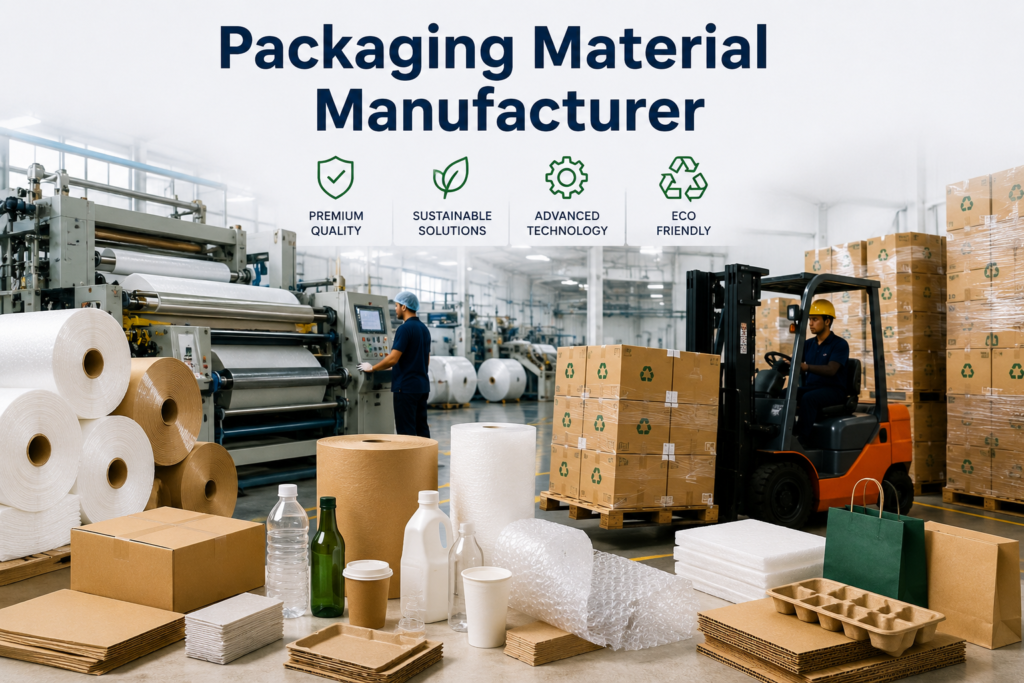
Packaging is essential for securing products, strengthening brand recognition, and facilitating safe transportation. Whatever sector you are working in (i.e., manufacturing, retailing, e-commerce, pharmacy, or food processing), the right decision about choosing your packaging material manufacturer will influence the quality of your products, the satisfaction of your customers, and the efficiency of your work.
A professional packaging material manufacturer provides not only quality packaging materials but also customized solutions, lasting reliability, on-time delivery, and affordable options. This guide examines types of packaging materials and their purposes and gives tips on how to find a good manufacturing partner for your business.
What Does a Packaging Material Manufacturer Do?
A packaging material manufacturer develops, designs, and manufactures packing solutions for many businesses and industries. The manufacturer provides materials that guard the product from spoilage, moisture, dirt, and environmental issues during storage and transportation.
Typical tasks of the manufacturer:
- Manufacturing packaging materials for various industries
- Customized packaging solutions according to the size of the product
- Maintaining quality while delivering mass production
- Ensure that the packaging is up to standard.
- Design eco-friendly and sustainable packaging
- Helping businesses unpack solutions.
Professional manufacturers assist businesses in saving on the cost of packing without compromising the safety of the product.
Types of Packaging Materials Available
Packaging solutions vary for a range of products owing to their weight, fragility, and how they should be stored as well as transported.
Plastic Packaging
Plastic packaging is still among the most commonly used materials in packing due to its strength, flexibility, and moisture resistance. It is used in a larger variety of commodities such as food, household goods, medicine, and some industrial items.
Among the most common types, there are the following:
- Plastic bags
- Stretch wrap
- Shrink film
- Plastic packaging containers
- Polyethylene film
Paper Packaging
Paper packaging is considered a green option for companies attempting to go green. It is light in weight, recyclable, and can be used for packaging purposes in the retail segment.
Some examples are:
- Paper bag
- Kraft paper
- Paper pouch
- Wrapping paper
- Printed cartons
Corrugated Packaging
Corrugated packing protects during shipping and storing. Its suitability and cushioning ability allow it to be favorable for transporting fragile as well as heavy products.
Some applications are
- Corrugated boxes
- Shipping cartons
- Export packing
- Industrial storage box
Foam Packaging
Foam packaging prevents fragile and valuable products from forces and vibrations during their transportation.
Typical products packaged with foam include:
- Consumer electronics
- Medical devices
- Automotive parts
- Glass products
Flexible Packaging
Flexible packaging is the combination of easy use and protection of products. It is very light in weight and easy to store.
Some items made from flexible packaging include:
- Doy packs
- Vacuum bags
- Laminated films
- Pouches
- Zipper bags
Protective Packaging
Protective packaging minimizes the amount of damage experienced by goods in the shipping process, as it protects products from shocks and pressure during transit.
Some popular protective packaging products are:
- Bubble wrap
- Air cushions
- Edge protectors
- Packing peanuts
- Packing films
Industries That Require Packaging Materials
Nearly all sectors need top notch packaging supplies to ensure the safety of products and enhance logistics.
Main industry sectors include the following:
- Food & beverage
- Medication
- Electronics
- Car industry
- FMCG
- E-commerce
- Beauty products
- Chemicals
- Agriculture
- Textile & clothing
- Industry production
Each industry entails special packaging according to the safety laws and particular requisites of products.
How to Choose the Best Packaging Material Manufacturer
Selecting the most appropriate packaging material manufacturer necessitates a thorough consideration of various factors.
Important factors to consider include:
- Industry background and knowledge
- Diversity of product range and options for customization
- Manufacturing capacity
- Quality assurance practices
- Competitive prices
- Timeframes for delivery
- Technical assistance
- Sustainability initiatives
- Certifications and specifications
- Reputation and customer feedback
A company that utilizes modern production technologies and possesses high quality assurance systems can ensure stable quality and delivery even in the case of large orders.
Benefits of Working with an Experienced Manufacturer
Working with an experienced manufacturer has numerous long-term benefits:
These include:
- Quality of the manufactured products is consistent.
- Reliable supply chain management
- Bulk production capabilities
- Cost savings due to efficient manufacturing processes.
- Tailor made packaging solutions.
- Short production times.
- Technical consulting.
- Compliance with industry legislation.
Trusted manufacturers keep businesses informed on cutting-edge packaging technologies and industry solutions, enabling them to enhance overall efficiency and reduce packaging waste.
Quality Standards Every Manufacturer Should Follow
The performance of packaging is greatly affected by the level of quality used in the production.
Important quality standards include:
- ISO-certified quality management systems
- Testing of raw materials
- Strength and durability testing
- Dimensional accuracy checks
- Moisture and temperature resistance tests
- Product traceability
- Compliance with requirements of food packaging or pharmaceutical standards
Reliable manufacturers implement strict quality control measures throughout the production process.
Sustainable Packaging Materials
Sustainability has become a top priority for businesses. Today, many companies manufacture eco-friendly packaging materials that minimize waste and promote efficiency.
Common sustainable packaging choices are:
- Recyclable paper packaging
- Biodegradable materials
- Packaging that can be composted
- Recycled plastic packaging
- Reusable packaging solutions
- Light packaging that cuts down on transport emissions
Employing sustainable packaging makes your firm environmentally friendly and enhances your brand image in front of environmentally conscious consumers.
Why Businesses Prefer Direct Packaging Material Manufacturers
Purchasing products from a packaging material manufacturer instead of through distribution gives the buyer more influence over the quality, price, and production timelines.
Major benefits include:
- Reduced cost of acquisition due to the absence of middlemen
- Greater level of customization
- Direct contact with specialists
- Speedy manufacturing and delivery process
- Enhanced quality control
- Stronger relationships with suppliers
- Availability of products at all times.
Manufacturers can adapt quickly to the customer’s needs in terms of the manufacturing process and the requirements of their seasonal sales.
Conclusion
Choosing the best packaging material manufacturer is indeed a critical business choice that impacts product safety, customer satisfaction, efficiency of operation, and costs. A reliable manufacturer ensures involvement in the production of high quality packaging materials, as well as in the development of customized solutions and reliable supply and execution of a multitude of various industry orders.
Regardless of whether your choice of packaging is plastic, paper, corrugated, or flexible, cooperation with a reliable manufacturer will guarantee a safe experience and growth of your business.
FAQs
Which packaging material is best for industrial products?
Corrugated boxes, protective foams, stretch films, and durable plastic coverings are commonly used to package industrial products since they are strong and protective.
Can manufacturers provide custom packaging?
Yes. The majority of manufacturers provide customized sizes, designs, printing, and branding options as well as specifications of the material to be used to meet business needs.
What industries buy packaging materials in bulk?
Food processing, pharmaceutical, FMCG, e-commerce, electrical, automotive, chemical, and manufacturing industries usually buy packaging materials in bulk.
Do packaging manufacturers offer export services?
Many experienced manufacturers make export quality packaging and help clients with international shipping according to international packaging standards.
How do I choose a reliable packaging material manufacturer?
By analyzing their experience, quality, certifications, customization capabilities, production capacity, delivery performance, pricing, and client reviews.
What certifications should a packaging manufacturer have?
The packaging manufacturer should have ISO 9001 certification for quality management and additional certifications for specific industries, such as the food and pharmaceutical industries.