
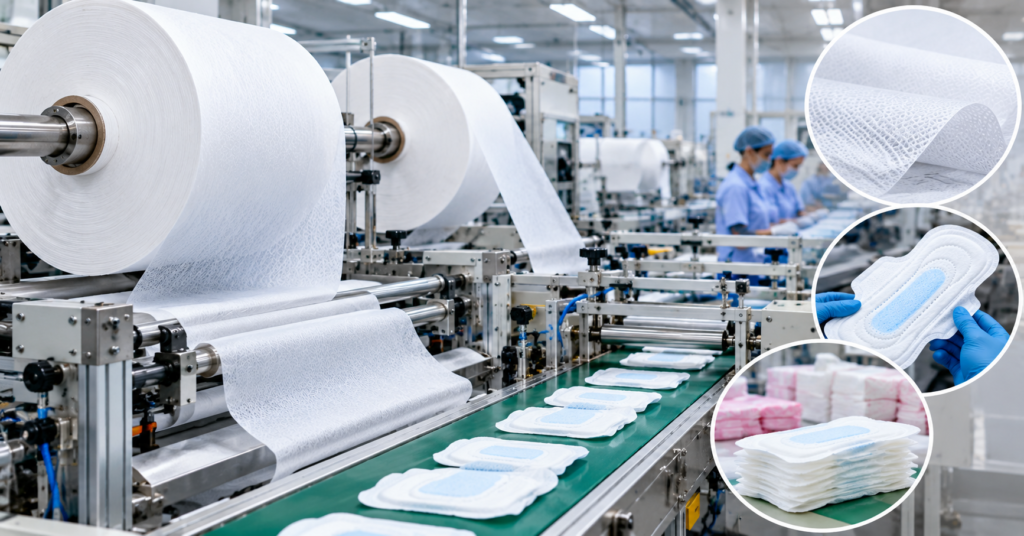
Non-woven fabric plays an important role in the manufacturing of sanitary napkins. It helps improve comfort, supports fluid movement, and provides the strength needed to maintain the product’s structure. Choosing the right fabric is essential for manufacturers who want to produce reliable, comfortable, and consistent feminine hygiene products.
Different non-woven fabrics offer different benefits, including softness, strength, flexibility, hydrophilicity, and air permeability. Understanding these properties helps manufacturers, wholesalers, and bulk buyers select materials that match their production needs.
In this guide, we’ll explore the main properties, types, applications, quality tests, and cost factors to consider when purchasing non-woven fabric for sanitary napkins.
What Is Non-Woven Fabric for Sanitary Napkins?
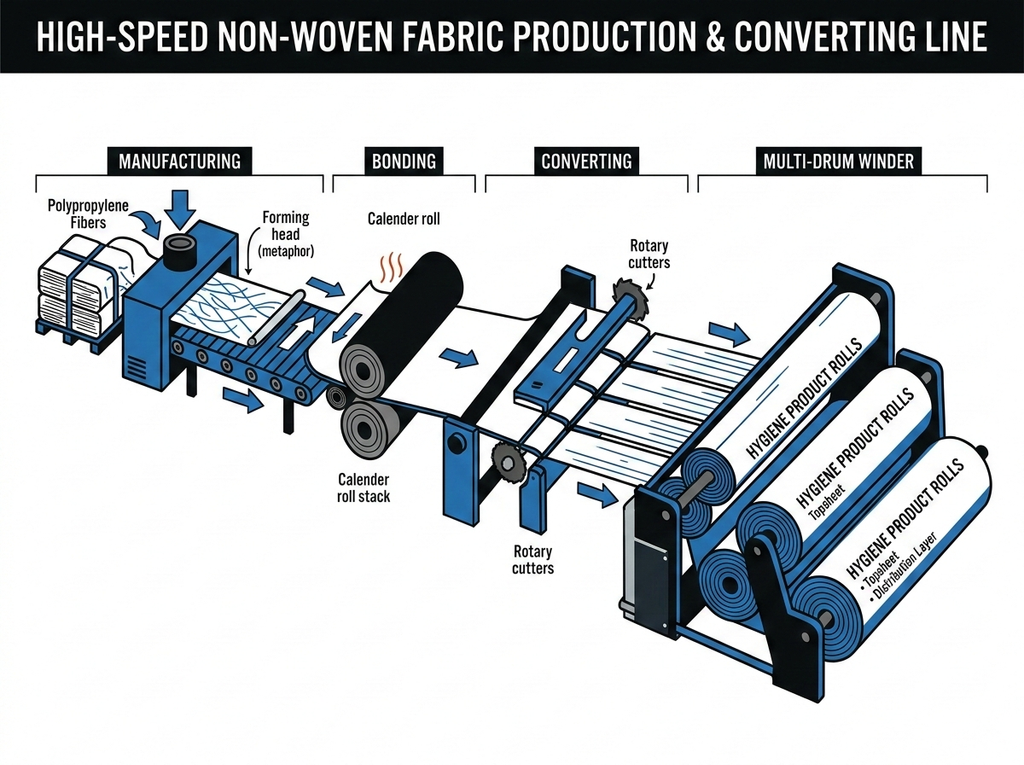
Non-woven fabric is an engineered textile made by bonding or entangling fibres or filaments rather than weaving or knitting them together. In sanitary napkins, it is used in different layers to support comfort, fluid management, and overall product construction.
Polypropylene (PP) is commonly used in hygiene nonwoven applications because it is lightweight and can be processed into different fabric structures. Other fibres and blends may also be suitable when specific levels of softness, absorbency, or performance are required.
The right material depends on where it will be used in the sanitary napkin. For example, the topsheet needs to feel comfortable against the skin and allow liquid to pass through, while other layers may help distribute fluid or provide structural support.
Key Properties of Non-Woven Fabric for Sanitary Napkins
Before selecting a material, manufacturers should consider several properties that influence the comfort, performance, and quality of the finished product.
Softness and Skin Comfort
Softness is especially important for the topsheet because it comes into direct contact with the skin. The fabric should have a comfortable surface that does not feel excessively rough.
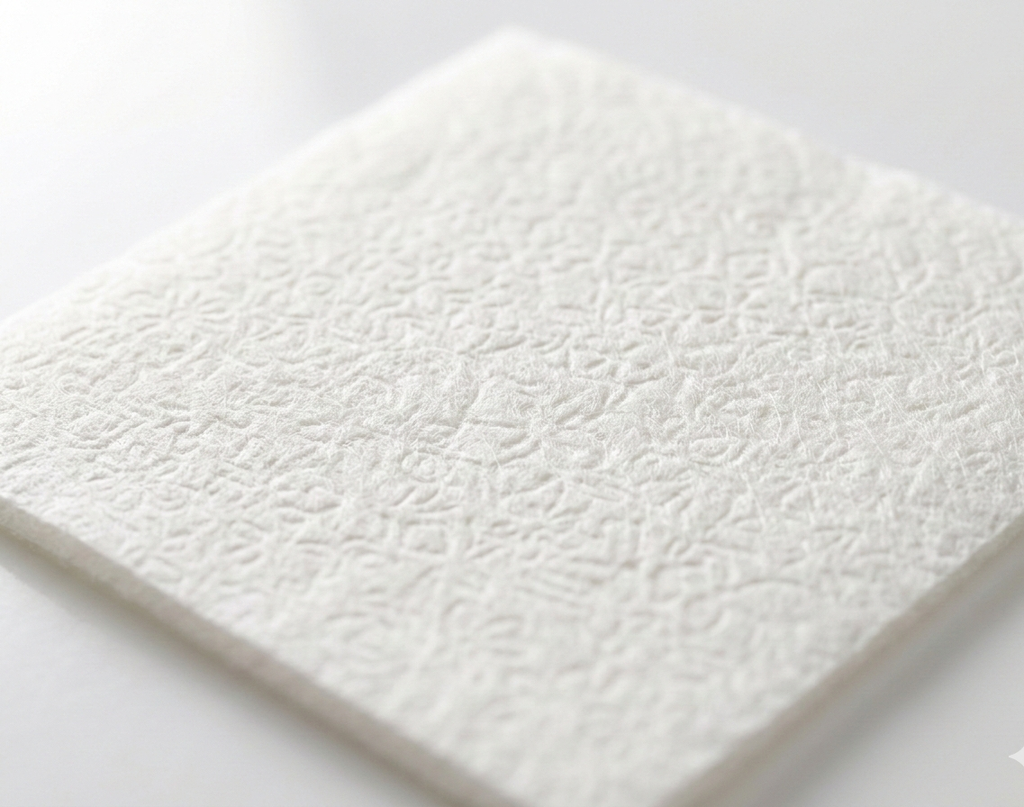
Several factors influence softness, including fibre characteristics, bonding methods, surface treatments, and fabric construction. Rather than judging a material by its GSM alone, manufacturers should evaluate its actual texture and performance through samples.
Fluid Transmission and Hydrophilic Properties
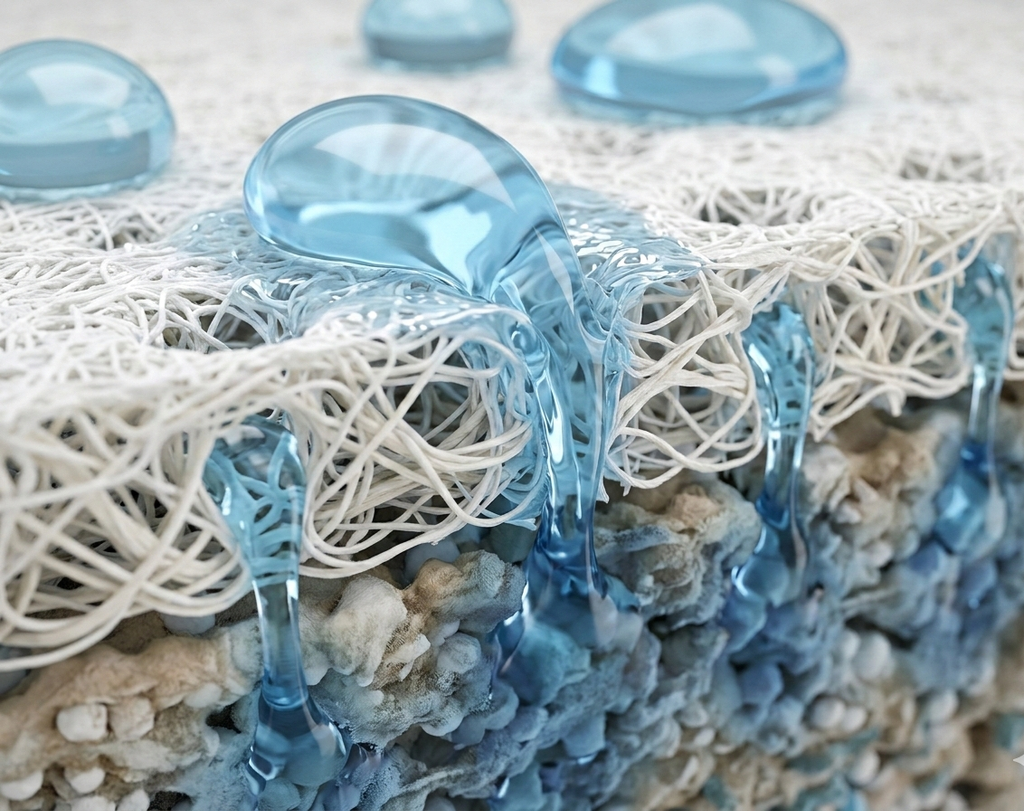
Hydrophilic nonwoven fabric allows water-based liquids to wet and pass through its structure more readily than untreated hydrophobic material. This makes it useful for topsheets designed to transfer menstrual fluid towards the absorbent core.
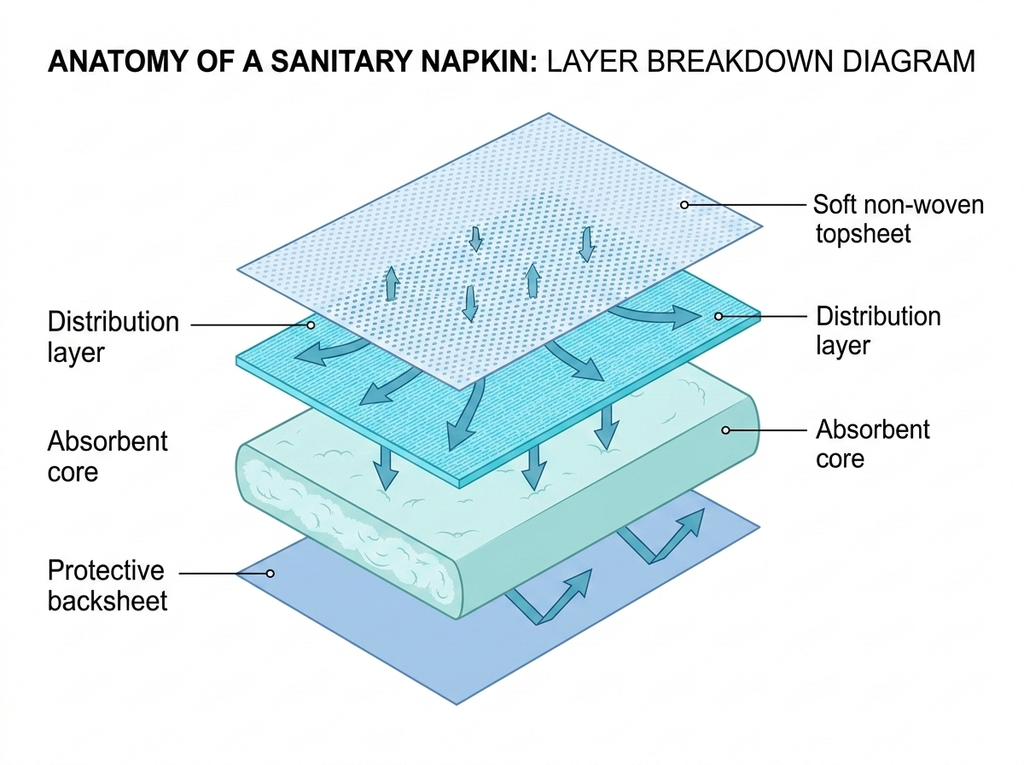
It is important to remember that the topsheet does not necessarily provide the main liquid storage function. The absorbent core typically holds most of the fluid, while the topsheet helps it move through the product.
Strength and Durability
Non-woven fabric must withstand cutting, bonding, converting, and assembly during production. Adequate tensile strength and tear resistance help reduce material damage and manufacturing waste.
The required strength depends on the fabric’s intended use and the conditions of the production line. Manufacturers should choose a material that balances durability with the softness and flexibility needed for the finished product.
Breathability and Air Permeability
Air permeability refers to how easily air passes through a fabric. This property can influence comfort, depending on the design and combination of materials used in the sanitary napkin.
The overall performance depends on the complete product construction, not just one layer. Buyers should therefore consider air permeability alongside fluid management and other relevant specifications.
Lightweight Construction and Flexibility
Lightweight nonwoven fabrics can help manufacturers produce thin, flexible hygiene products. However, reducing fabric weight should not come at the expense of strength or reliable processing.
The ideal balance depends on the product design. Testing the material on the actual production line can help identify potential issues before large-scale manufacturing begins.
Consistent Quality and Cleanliness
Consistent GSM, width, surface quality, and bonding strength help maintain predictable production results. Cleanliness is equally important for materials intended for intimate skin contact.
Manufacturers should establish clear quality specifications and check batch consistency before committing to regular bulk orders.
Types of Non-Woven Fabric Used in Sanitary Napkins
Different nonwoven technologies offer different advantages, depending on the component and its intended function.
- PP spunbond nonwoven fabric: Made from continuous polypropylene filaments, this fabric offers lightweight construction and useful strength. Its suitability depends on the required surface properties and application.
- Hydrophilic nonwoven fabric: Designed or treated to improve wetting and fluid passage, it is commonly considered for topsheets that transfer liquid towards the absorbent core.
- Hydrophobic nonwoven fabric: This material resists wetting under specified conditions and may be used in selected barrier or protective components.
- Spunlace nonwoven fabric: Produced by entangling fibres with high-pressure water jets, spunlace can offer softness and flexibility. Its suitability depends on fibre composition, absorbency, cleanliness, and intended use.
- Multilayer nonwoven constructions: Combining different layers can help manufacturers balance softness, fluid transmission, strength, and barrier performance.
Not every fabric is suitable for every part of a sanitary napkin. The best choice depends on the product’s requirements and should be confirmed through testing.
Applications of Non-Woven Fabric in Sanitary Napkins
Nonwoven materials serve several purposes in sanitary napkin manufacturing.
- Topsheet: The skin-contact layer that helps transfer menstrual fluid towards the absorbent core.
- Distribution layer: Selected materials help spread liquid across the absorbent structure.
- Outer cover: Suitable fabrics contribute to the external surface and overall product construction.
- Side panels and wings: Nonwovens may provide flexibility, strength, and reliable bonding.
- Other feminine hygiene products: Similar materials may also be used in panty liners and other hygiene products when their specifications meet the required standards.
Choosing suitable materials for each component helps manufacturers balance comfort, fluid management, durability, and production efficiency.
Hydrophilic vs. Hydrophobic Non-Woven Fabric
The main difference between these materials is how they interact with water-based liquids.
| Feature | Hydrophilic Nonwoven | Hydrophobic Nonwoven |
| Liquid interaction | Promotes wetting | Resists wetting |
| Typical application | Fluid-transfer topsheets | Selected barrier components |
| Surface properties | May use a wetting treatment | May be untreated or designed to resist wetting |
| Key quality check | Wetting and fluid transmission | Liquid resistance and barrier performance |
Hydrophilic fabrics are generally preferred when liquid needs to pass through the material, while hydrophobic fabrics may be suitable when resistance to wetting is required. Actual performance depends on the fabric construction and the finished product design.
How to Choose the Right Non-Woven Fabric for Sanitary Napkins
Selecting the right material starts with understanding its role in the product. Manufacturers can follow these steps:
- Identify the application: Decide whether the fabric will be used for the topsheet, distribution layer, outer cover, or another component.
- Compare suitable materials: Evaluate PP spunbond, spunlace, hydrophilic, and other relevant fabric constructions.
- Confirm specifications: Check GSM, width, roll length, and other production requirements.
- Evaluate fluid management: Test wetting and fluid transmission where these properties are important.
- Check production performance: Ensure the fabric can be cut, bonded, and processed consistently on the manufacturing line.
- Request samples and documentation: Review samples, technical data sheets, and available test reports before placing a bulk order.
A fabric that works well in one sanitary napkin design may not deliver the same results in another. Testing it within the intended product construction is therefore essential.
Quality Testing for Sanitary Napkin Non-Woven Fabric
Quality testing helps confirm that the material meets agreed specifications. Depending on its intended use, manufacturers may check:
- GSM and thickness: To confirm fabric weight and consistency.
- Tensile strength and elongation: To assess strength and stretching behaviour.
- Wetting time and fluid transmission: To understand how the fabric interacts with liquids.
- Air permeability: To measure airflow when relevant to the application.
- Surface quality and cleanliness: To identify visible defects, contamination, or inconsistent bonding.
- Batch consistency: To check whether material properties remain stable across production lots.
Skin-contact safety and applicable product requirements should also be considered. Test methods and acceptance limits should match the fabric’s intended application.
Factors Affecting the Cost of Hygiene Non-Woven Fabric
Several factors influence the price of nonwoven fabric used in feminine hygiene products.
- Raw materials: Polymer and fibre prices affect manufacturing costs.
- GSM and construction: Fabric weight, fibre structure, and bonding methods influence the cost per kilogram and square metre.
- Special treatments: Hydrophilic finishes and other functional treatments may increase the price.
- Order volume: Minimum order quantities and bulk purchasing arrangements can affect quotations.
- Customisation: Special widths, colours, roll lengths, and other specifications may add to the cost.
- Quality and logistics: Testing, packaging, transportation, and delivery schedules also contribute to the final procurement cost.
When comparing suppliers, make sure the quotations cover equivalent fabric types, GSM, treatments, dimensions, and quality requirements. The cheapest option may not offer the best value if it causes production waste or fails to meet specifications.
How to Choose a Reliable Hygiene Non-Woven Fabric Manufacturer
A reliable supplier should clearly explain its product specifications, quality controls, production capacity, and supply terms.
Before placing an order, check the availability of the required fabric type and GSM, technical data sheets, relevant test reports, sample availability, and consistency across batches. It is also worth confirming minimum order quantities, delivery timelines, packaging, traceability, and procedures for handling quality complaints.
Most importantly, ensure the material is designed and qualified for its intended use in feminine hygiene products.
If you are exploring nonwoven fabric supply options, visit Metro Plasto to discuss your requirements and confirm product availability, technical specifications, and bulk supply options.
Frequently Asked Questions
Which non-woven fabric is commonly used for sanitary napkins?
PP spunbond and other engineered nonwoven materials are used in different sanitary napkin components. Hydrophilic nonwoven fabric is commonly considered for topsheets, while other constructions may support fluid distribution, product structure, or external layers.
What is hydrophilic non-woven fabric used for in sanitary pads?
Hydrophilic fabric promotes wetting and helps water-based liquids pass through the material. It is often used in topsheets designed to transfer menstrual fluid towards the absorbent core.
Is PP spunbond fabric suitable for sanitary napkins?
PP spunbond can be suitable for selected components when its strength, surface properties, cleanliness, and other specifications meet the intended requirements. Not every PP spunbond fabric is suitable for direct skin contact or fluid-transfer applications.
What GSM is suitable for sanitary napkin non-woven fabric?
There is no single GSM suitable for every component. The appropriate weight depends on the fabric’s function, required strength, fluid management, and production process. Manufacturers should follow validated product specifications and supplier recommendations.
What should manufacturers check before buying hygiene non-woven fabric?
Manufacturers should review the fabric type, GSM, width, roll length, surface properties, fluid transmission, strength, cleanliness, batch consistency, and technical documentation.
Conclusion
Non-woven fabric is an essential material in sanitary napkin manufacturing, contributing to comfort, fluid management, durability, and consistent product quality. Its performance depends on factors such as softness, strength, flexibility, fluid transmission, and cleanliness.
For manufacturers and bulk buyers, choosing the right fabric means understanding the needs of each product component, comparing technical specifications, and testing samples before making a purchasing decision.
Working with a reliable supplier and validating the material under actual manufacturing conditions can help reduce production issues and support consistent results. Before purchasing in bulk, make sure the fabric meets your product requirements and performs reliably throughout the manufacturing process.