
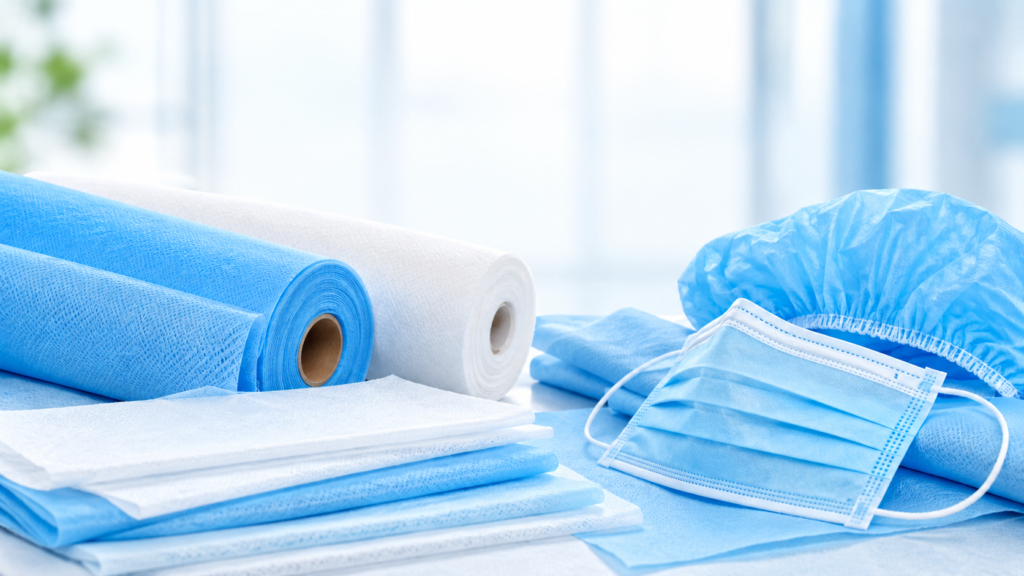
Medical nonwoven fabric is used in many healthcare products, from disposable gowns to wipes and filtration materials. It’s made by bonding or interlocking fibres rather than weaving yarns together. This lets manufacturers create fabrics with specific qualities, such as softness, strength, breathability, absorbency or fluid resistance. Premium PP spunbond non-woven fabric options are available across India for these healthcare uses.
If you’re sourcing medical nonwoven fabric in India, the right choice depends on what you’re making. A fabric suitable for a patient gown may not work for a mask or medical wipe. This guide covers common fabric types, what to check before buying, and how to compare suppliers.
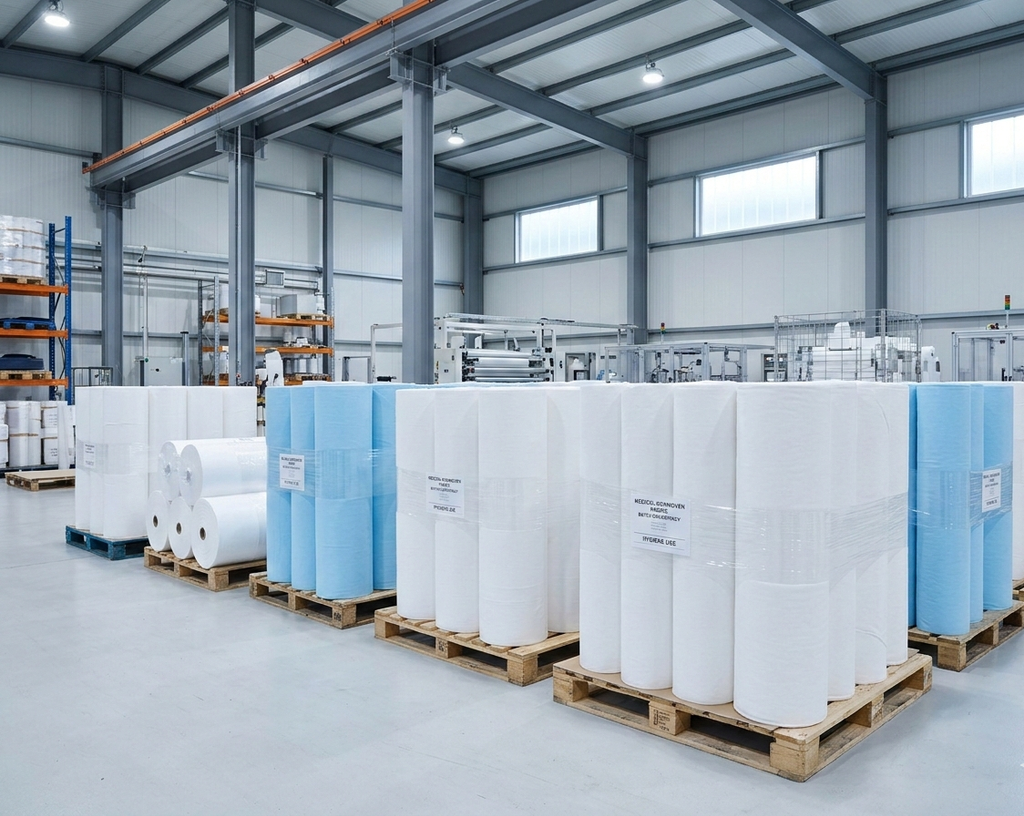
What Is Medical Nonwoven Fabric?
Medical nonwoven fabric is an engineered material made for healthcare or medical-related products. Polypropylene (PP) is commonly used because it is lightweight and can be made into different fabric structures. Other fibres, such as viscose, polyester or cotton, may be used when softness or absorbency is important.
The manufacturing process affects how the fabric performs. Spunbond, meltblown, SMS and spunlace are among the types used in healthcare products. Each has different characteristics, so it’s important to match the material to the finished product.
Common Types of Medical Nonwoven Fabric
PP spunbond
PP spunbond is made by forming continuous polypropylene filaments into a web and bonding them together. It is generally lightweight and durable, with a useful balance of strength and breathability.
It may be used for disposable gowns, patient-care products, covers and some medical packaging. The fabric’s properties vary with its weight and construction.
Spunbond fabric does not automatically provide fluid protection or act as a sterile barrier. Those qualities need to be confirmed for the specific material and product.
Meltblown
Meltblown fabric is made from very fine polymer fibres. Its structure can provide filtration properties when the material is designed and tested for that purpose. It is often used as one layer in a multilayer product.
Potential uses include filtration layers in selected masks and respirators, and other specialised filtration products. Buyers should ask for relevant test results: the name “meltblown” alone does not prove that a material meets a particular filtration requirement.
SMS
SMS stands for spunbond-meltblown-spunbond. This layered construction combines spunbond layers with a meltblown layer. Depending on its design, it can offer a mix of strength, handling and barrier properties.
SMS may be used in selected gowns, drapes, covers and protective apparel. Not all SMS fabrics perform the same way, so check the specifications and test results for the intended use.
Spunlace
Spunlace, also called hydroentangled fabric, is made by using high-pressure water jets to entangle fibres. Depending on the fibre blend, it can feel soft and flexible and may absorb liquids well.
It is commonly considered for medical wipes and patient-care products. For wound-contact or other regulated uses, the material must meet the relevant safety and performance requirements.

Where Is Medical Nonwoven Fabric Used?
Medical nonwoven fabric can be used in:
- Disposable gowns and selected medical & hygiene fabrics for protective apparel
- Surgical drapes and covers
- Masks and other filtration products
- Medical and patient-care wipes
- Healthcare packaging
- Patient-care products
The required material depends on the product. A wipe may need softness and absorbency, while a gown or drape may need specific strength and fluid-resistance properties. A fabric type by itself does not guarantee that the finished product will meet its intended requirements.
What to Check Before You Buy
Before ordering in bulk, compare the material with the needs of your finished product.
GSM: GSM means grams per square metre and describes the fabric’s weight. A higher GSM does not automatically mean better protection. Construction and test results matter too.
Strength and stretch: Tensile strength and elongation can affect how a fabric holds up during cutting, stitching, converting and use.
Breathability: Air permeability matters for some garments and masks. It should be considered alongside any filtration or barrier requirements.
Fluid resistance: If the product is intended to reduce exposure to liquids, ask how that performance was tested. Don’t infer it from fabric type or weight.
Filtration: Ask for test results relevant to the intended product and standard. Appearance alone cannot confirm filtration performance.
Cleanliness and linting: These may matter in healthcare settings, depending on the product and how it will be used.
Batch consistency: Agree on acceptable ranges for GSM, width, colour, strength and other specifications before production begins.
How to Choose the Right Fabric
A clear specification makes it easier to compare materials and suppliers. Start by identifying the finished product and its intended use. Then decide which properties matter, such as GSM, width, strength, absorbency, filtration or fluid resistance.
Once you have those requirements:
- Compare fabric types that could meet them.
- Request samples and try them in your own manufacturing process.
- Ask for technical data sheets and test reports that support performance claims.
- Check whether the supplier can meet your order volume and repeat-order schedule.
- Compare the total cost, including usable yield, delivery, packaging and any minimum order quantity.
The lowest price per kilogram may not be the best value if the fabric does not suit your process or produces more waste.
Wholesale Prices in India
There is no single wholesale price for medical nonwoven fabric. Quotes depend on the material, specifications, order size and market conditions. Common factors include:
- Raw material costs
- Fabric type and construction
- GSM, width and roll length
- Custom colours or other requirements
- Testing and documentation
- Order quantity, packaging and delivery location
For a useful comparison, ask suppliers to quote against the same specifications. A lightweight spunbond material and a tested multilayer SMS fabric are different products and should not be treated as interchangeable.
When requesting a quote, include the fabric type, GSM, width, quantity, intended application, required documents and delivery location.
Documents and Supplier Checks
Depending on the application, you may need a technical data sheet, certificate of analysis for a batch, relevant performance test reports, safety data sheet, batch traceability information or quality-management documentation.
A supplier’s general quality certificate does not, by itself, prove that your finished medical product meets every applicable requirement. Confirm which standards and regulations apply to the finished product and its target market.
When comparing suppliers in India, check that they can provide the material and specifications you need, share relevant documentation, supply samples and meet your expected delivery schedule. Clear quotations and reliable batch consistency are also useful when planning repeat orders.
If you are sourcing healthcare-related nonwoven fabric, Metro Plasto may be a starting point for an enquiry. Contact the company to confirm its current product range, specifications and available documentation for your application.
Frequently Asked Questions
What is medical nonwoven fabric used for?
It is used in products such as gowns, drapes, selected masks, wipes, protective apparel and healthcare packaging. The right material depends on the product’s required performance.
Which nonwoven fabric is commonly used in medical disposables?
PP spunbond, meltblown, SMS and spunlace are used in different products. Their properties vary, so check the specifications and test results for your intended use.
Is PP spunbond suitable for every medical application?
No. It may suit some disposable products, but it does not automatically provide filtration, fluid resistance, sterility or barrier performance.
What should I ask a supplier for?
Depending on the application, request a technical data sheet, samples, relevant test reports and batch information. You may also need other documents to support your quality or regulatory process.
Conclusion
Medical nonwoven fabrics come in several types, each suited to different product needs. Before buying wholesale in India, define the application, set clear specifications, test samples and review relevant documents. These steps can help you choose a fabric that works for your production process and your customers’ requirements.