The price of nonwoven fabric does not constitute a single amount, since it fluctuates depending on its GSM, the quality of raw The price of nonwoven fabric does not constitute a single amount, since it fluctuates depending on its GSM, the quality of raw materials used to manufacture the fabric, colour and width, as well as the size of the order placed. Hence, different suppliers involved in selling nonwoven fabric can offer different prices for the “same” fabric product. This guide will provide essential information about the factors that affect the overall nonwoven fabric cost, how to calculate it based on the price per kilogram, and how to compare supplier quotes properly so you’re not just chasing the lowest number on paper.
What Is the Price of Nonwoven Fabric Per Kg?
The vast majority of suppliers prefer a PP nonwoven fabric price per kilogram instead of presenting as a fixed amount. The main reason for the price variation is that PP is actually derived from petroleum, and the cost of raw material fluctuates with crude oil price changes and PP resin prices. In most cases, standard PP spunbond fabric can cost somewhere within a range of ₹70 to ₹1800 per kilogram, depending on its quality and GSM. However, the figure is a rough indication of the price, and you should always make sure to get a current quote before making any purchases!
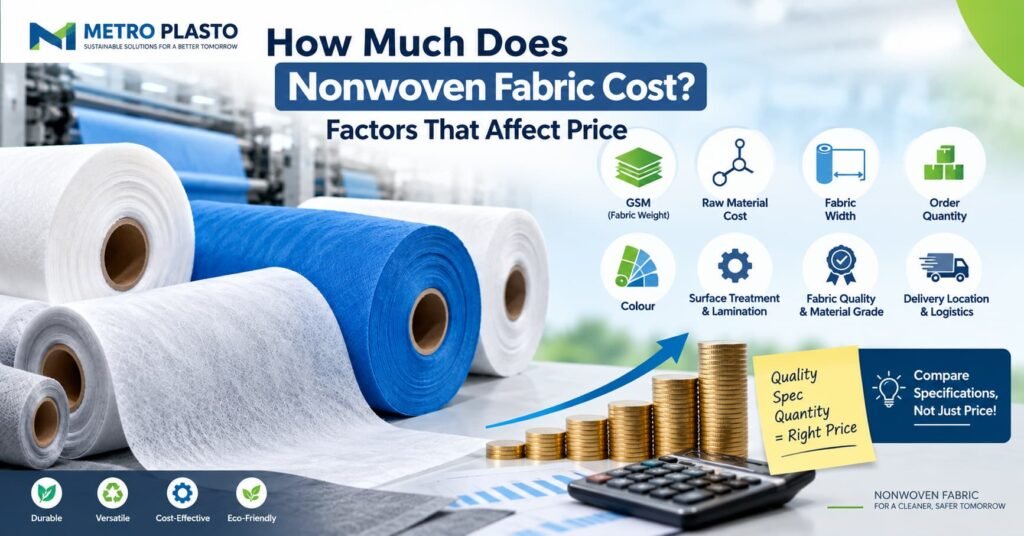
8 Factors That Affect NonWoven Fabric Price
1. GSM of the Fabric
Higher GSM means more raw material per square metre, which adds to the cost of the fabric. Weight is generally the most important factor for the final price.
2. Polypropylene Raw Material Cost
Polypropylene nonwoven fabric follows a straightforward chain: crude oil → petrochemical feedstock → polypropylene resin → nonwoven fabric. Application of the above chain helps us understand the volatility of fabric prices as they fluctuate significantly with changes in crude oil prices.
3. Fabric Width
Wider fabric rolls require more raw materials per metre, thus influencing production efficiency. We produce polypropylene spunbond fabric in 63, 72, and 96 widths; therefore, the width should always be taken into account together with GSM when comparing quotes, since a narrower roll at a higher per kg price can still work out cheaper for your application.
4. Order Quantity
Big orders allow distributing fixed production costs (machine setup, colour batching) over a larger volume; this is why large-volume orders are usually cheaper per kilogram.
5. Colour
Raw (uncoloured) fabric is generally the least expensive option. New colours have to be batch dyed and cleaned separately during the process, which can add to costs, especially for small quantities.
6. Surface Treatment & Lamination
The cost of raw materials and processing are increased by the addition of BOPP or other surface coatings, but waterproofing and a more aesthetic finish are also added, which may justify a higher price for retail products.
7. Fabric Quality & Raw Material Grade
Virgin PP is more expensive than the recycled one, but the material is better in terms of uniformity, durability and tensile strength. Cheaper grades may have identical specifications but perform differently.
8. Delivery Location & Logistics
The total cost, which is affected by the transport costs from the manufacturing facility and the terms of delivery, means two identical fabrics can carry different total costs purely based on where you’re located.
How GSM Changes the Cost of Nonwoven Fabric
While suppliers typically provide their prices in per kg terms, buyers often use meters as their relevant measuring unit for textile materials, especially when they consider fabric rolls of various widths. This is the basic formula:
Price per metre = Price per kg × GSM × Width (metres) ÷ 1000
Example: If price = ₹100/kg, GSM = 60, and width = 1.6 metres:
₹100 × 60 × 1.6 ÷ 1000 = ₹9.60 per metre
This calculation matters because a lower per kg quote doesn’t always mean a lower per meter cost; a lighter GSM at a higher per-kg price can still come out cheaper per meter than a heavier fabric at a lower per-kg rate. Always convert to the same unit before comparing two quotes.
PP Spunbond Nonwoven Fabric Price vs Other Nonwoven Fabrics
Spunbond PP is usually the cheapest nonwoven fabric for mass production of bags, since it is done in a continuous way and so the material and labour costs are lower. Spunlace fabric, which is manufactured with the use of the water-jet bonding method, has a higher cost due to more energy and processing input. Laminated nonwoven fabric costs more than basic spunbond fabric because of the BOPP film and lamination processes involved; however, it also offers water-repellent properties and a finish that spunbond alone doesn’t offer, so the price difference reflects real functional value, not just processing cost.
Read also: Non Woven Bag Raw Material Supplier & Manufacturer for Bulk Buying
How to Compare Two Nonwoven Fabric Quotes
Comparing quotes based on price per kg is not enough. Use the following eight parameters before making any decision:
- Fabric type
- GSM
- Width
- Raw material specification
- Colour
- Treatment/lamination
- Order quantity
- Terms of delivery
Example:
- Supplier A: ₹95/kg; 50 GSM; 63 inch; white
- Supplier B: ₹100/kg; 60 GSM; 72 inch; white
The quote from Supplier A appears less expensive than Supplier B but fabric from Supplier A is lighter and narrower. Therefore, analyse the cost per metre before concluding that Supplier A offers the better deal. A 20% jump in GSM and width can easily offset a 5% difference in per-kg price.
How to Get an Accurate Nonwoven Fabric Price
The only way to obtain an accurate quote is by obtaining a quote that features the precise specification: GSM, size, colour, finish, and order quantity because relying on published ranges that vary with the changing raw material prices would be untrustworthy. Since 2011, Metro Plasto has manufactured PP spunbond nonwoven material in the widths of 63, 72, and 96 inches, and they offer the custom options for GSM, colour, and lamination. Ask for a quote now or contact Metro Plasto on WhatsApp for the latest price for your specification.
FAQs
What is the price of nonwoven fabric per kg?
The price varies depending on the GSM, quality, and order volume and moves with PP resin cost. Request a current quote against your exact spec rather than relying on a published range.
What factors affect PP spunbond nonwoven fabric Cost?
The price of nonwoven fabric depends on GSM, raw material (PP resin) cost, fabric width, order quantity, colour, lamination, material quality, and delivery location.
Is higher GSM nonwoven fabric more expensive?
Yes, higher costs of nonwoven fabric mean more raw materials are used, meaning higher costs in total.
Is nonwoven fabric cheaper when bought in bulk?
In general, yes. Greater quantities lead to fixed costs of production, such as machine setup or ink mixing, and colour batching across more output, lowering the per kg rate.
How is the non-woven fabric price per meter calculated?
Price per metre = Price per kg × GSM × Width (in metres) ÷ 1000 makes it possible to obtain valid comparisons between quotes based on price per kg or price per metre.
Why do two suppliers quote different prices for the same GSM?
Because GSM isn’t the only parameter affecting the price, the width, raw material grade (virgin vs. recycled PP), the colour, lamination, order quantity, and delivery terms can all differ even when GSM matches.
Conclusion
While the way nonwoven fabric is priced looks simple at first – a rate per kg but the actual price depends on all sorts of factors, such as GSM, material grade used, width, colour, treatment, and volume of the order. The best way to ensure suppliers can be compared is to convert every quote into a common unit and check all specifications side by side instead of merely looking for the lowest ₹/kg quoted. If in doubt, it is better to ask suppliers to provide a quote based on specification comparison instead of applying a standard price range to your order.