
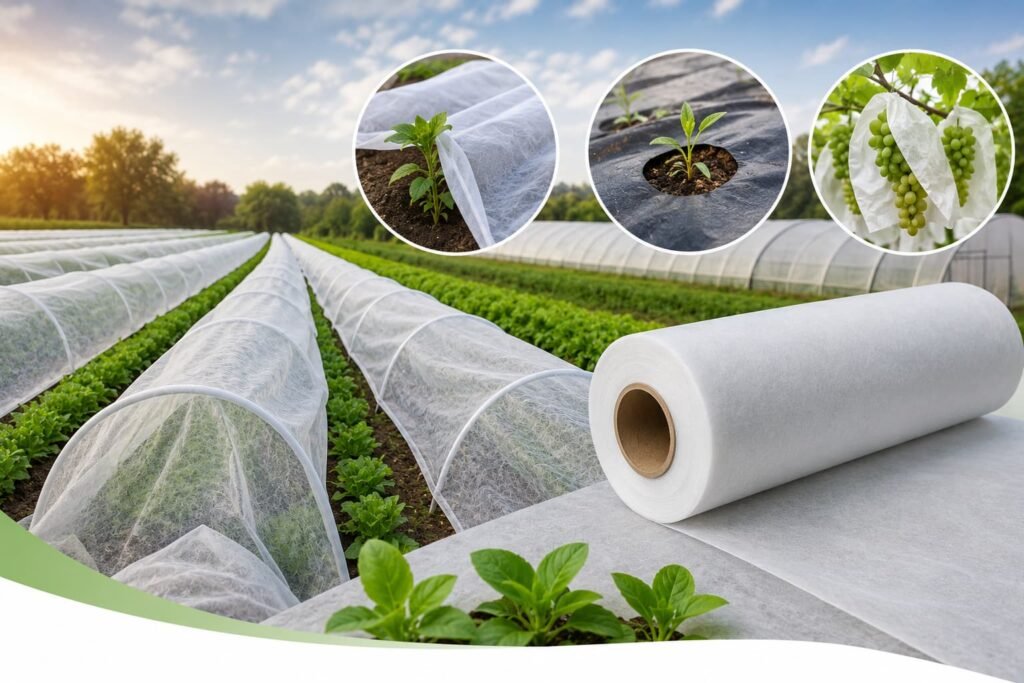
The use of agricultural nonwoven fabric continued to grow for crop protection, weed control, frost protection, and improving the growing environment. It is critical for nurseries, commercial farms, and agricultural distributors to find the right agricultural nonwoven fabric manufacturer to guarantee excellent quality and a steady supply in bulk. While selecting any supplier for agricultural nonwoven fabric, the buyers should focus on different parameters such as GSM, UV resistance, strength, breathability, use patterns, customisation, and delivery.
What Is Agricultural Nonwoven Fabric?
Agricultural nonwoven material is a manufactured textile that is produced with the help of glued yarns or polymer strings without the usual use of weaving or knitting. Polypropylene (PP) spunbond is the most popular material of choice in this regard due to its lightness, durability, and versatility.
With respect to its structure and treatment, agricultural fabric is capable of protecting from frost, wind, bugs, excessive sunshine, and weeds while letting air and moisture flow freely.
Types of Agricultural Nonwoven Fabrics
Different agricultural applications require different fabric properties.
| Fabric Type | Key Features | Common Applications |
| Crop Cover Fabric | Lightweight, breathable | Frost and weather protection |
| Weed Control Fabric | Durable, light-blocking | Weed suppression |
| UV-Treated Fabric | Improved outdoor durability | Long-term crop protection |
| Spunbond Fabric | Strong and versatile | Crop covers, nurseries |
| Ground Cover Fabric | Resistant and durable | Paths, beds, landscaping |
The right fabric depends on crop type, climate, exposure period, and the level of protection required.
How Agricultural Nonwoven Fabric Is Manufactured
The process of producing nonwoven fabric for agricultural applications involves melting the plastic polymer and creating long fibres that will then be processed into sheets. This is done by applying heat or other methods to bunch the fibres into fabric.
When fabric is manufactured as a nonwoven product, conditions such as fabric GSM level, thickness, width, strength, and bonding should be taken into account. The fabric may also contain UV stabilisers or other treatments to make it suitable for outdoor application.
Crop Specific Applications of Agricultural Nonwoven Fabrics
Agricultural textiles are suitable for various forms of cultivation:
- Vegetable crops: Protect seedlings and crops from cold snaps, windy weather, and pest agents.
- Fruiting crops: Minimise the negative effects of the environment and insects.
- Plants for nursery: Facilitate the formation of the necessary external environment for the propagation of small plants.
- Herbs and leafy vegetables: Reduce adverse conditions and pest agents.
- Field crops: Crop covers give temporary protection from the weather.
- Horticulture: Using ground cover and weed control textiles for unwanted planting.
Seasonal Uses of Agricultural Nonwoven Fabrics
The use of agricultural cloth can be varied depending on the season.
- Winter: Protection of crops from frost and cold.
- Spring: Protection of seedlings and management of pests.
- Summer: Certain materials can provide shade and reduce stress on the environment.
- Monsoon: Groundcover can aid in weed control and protect growing areas.
Farmers must choose fabric depending on the situation and requirements of crops.
How to Choose the Best Agricultural Nonwoven Fabric Manufacturer
Before you select a supplier, verify the quality, capacity, specifications, customisation options, and timely delivery of the products. Request samples and evaluate the parameters of GSM, tensile strength, breathability, and UV stability of the item.
Supplier Evaluation Checklist
- Quality of raw materials
- Available sizes and GSM
- UV treatment availability
- Tensile and tear strength
- Batch-to-batch consistency
- Production capacity of supplier
- Possibilities of customization
- Quality control testing and document availability
- Minimum order quantity and lead time
- Packaging and logistics
Packaging, Storage & Logistics
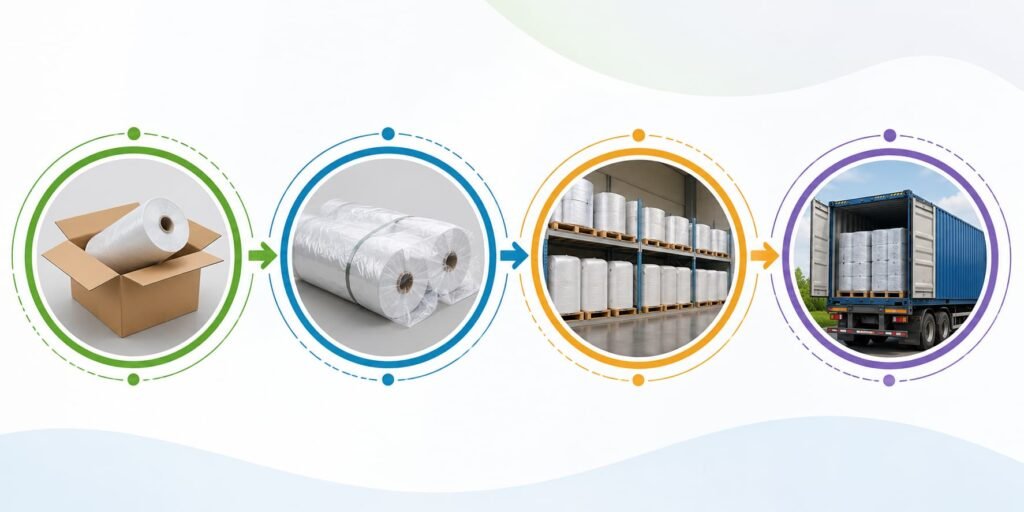
Agricultural fabric must be properly packaged to ensure that it will be safe from water, contamination, and other potential dangers while being shipped around. It is a good idea to store the rolls of fabric in a clean and dry area away from the sun and heat as long as they are not being utilised.
Sustainability Benefits of Agricultural Nonwoven Fabrics
Agricultural nonwoven fabrics can help farming practices become more efficient by contributing to weed control, crop protection, and other matters. For instance, any fabric that was created properly and constructed in the right way may be reused several times depending on its production.
Cost vs ROI: Why Agricultural Nonwoven Fabrics Are Worth the Investment
The low-priced fabric is not necessarily the best. It may be worth investing in a more durable fabric that has good UV resistance.
When considering the ROI, it is important to take into account:
- Life cycle of the product
- Advantages in terms of crop protection
- Reduced weed management requirements
- Savings on labor
- Replacement frequency
- Costs incurred during installation and handling
- Quality of crops and possible yields
Common Buying Mistakes to Avoid
- Relying solely on price: The cheapest cloth may lack sturdiness or long lasting quality.
- Disregarding GSM: Use GSM based on the type of crop, environment, and usage.
- Avoiding UV requirements: Outdoor supplies may need UV curing to be used longer.
- Not examining samples: Verify strength, dimensional accuracy, permeability, and finishing quality before purchasing in bulk.
- Ignoring application requirements: Different crop covers may have different expectations.
- Overlooking supplier capacity: Be sure that the supplier can fulfil recurring or seasonal orders.
- Ignoring the logistics: Discuss roll size, type of packaging, minimal order quantity (MOQ), and timing of delivery in advance.
Expert Tips for Farmers & Bulk Buyers
- Choose fabric based on application: Choose GSM, strength, and design according to the crop and the protection needed.
- Ask for samples: Try the material in real-life conditions or in maximum resemblance to the actual ones.
- Verify UV treatment: Check if the material is suitable for long-term outdoor use.
- Evaluate the overall cost: Consider lifespan, labour costs, the frequency of replacements, and the efficiency for crop protection.
- Organise purchases in advance: Make orders early in order to avoid delays in delivery during peak season.
- Maintain product specifications: Stick to the approved specification sheet when repeating orders.
- Choose a trusted manufacturer: A good manufacturer can provide technical guidance and guarantee that you receive the same high quality every time.
Conclusion
Farmers and agricultural businesses can get reliable crop protection and weed control products efficiently and cost effectively with the right agricultural nonwoven fabric manufacturer. When buying, you need to consider the GSM required, strength, UV treatment, breathability, durability, options for customisation, quality testing, packaging, and logistics.
FAQs
What is agricultural nonwoven fabric?
It is defined as a lightweight synthetic fabric made for purposes like crop protection, weed management, frost prevention, or similar agricultural uses.
Which GSM is best for crop covers?
Determining the desired GSM must depend on the crop and its requirements, weather condition considerations, and its intended use, along with consulting professionals for advice.
Which crops benefit most?
Vegetables and fruits, herbs, nursery plants, and horticultural crops benefitted from using agricultural nonwoven materials.
How long does UV-treated nonwoven fabric last?
The longevity of nonwoven materials depends on many factors, which include the type of UV processing, fabric type, external conditions, and factors associated with its use.
How do I choose the right agricultural fabric?
Keep in mind factors like crops used, their purpose, GSM, durability, climate, and other usage related considerations.
How do I source bulk agricultural nonwoven fabrics?
Compare manufacturers on product quality and capacity, specifications, testing, design, price, customisation, MOQ, and delivery reliability before placing a bulk order.